
November 16, 2026
Archery Heat Safety: Open Ranges, Long Tournament Days and Archers Far From Help
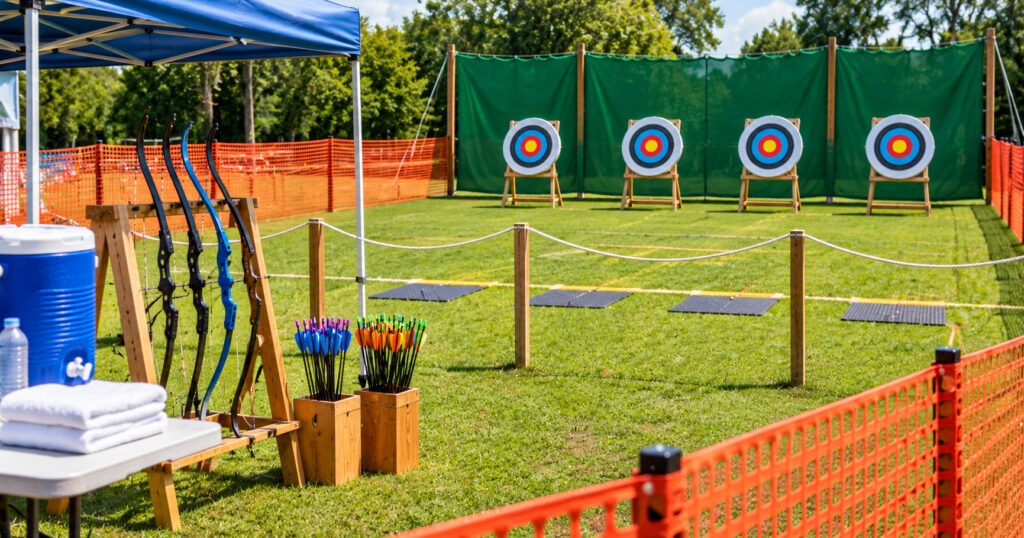
Archery looks like a calm sport, so heat is easy to brush off. But outdoor archery happens on open fields with little shade, often in the middle of summer. Archers stand on the shooting line in full sun, walk to the targets and back after every end, and do it again for hours. Field and 3D courses send archers up and down hills through the woods, far from the parking lot. Summer camps can run archery all afternoon, and tournaments can fill a whole day.
Exertional heat stroke is 100% survivable when the athlete is cooled fast, on site. This guide is for club leaders, coaches, camp staff, tournament organizers and parents who want a heat plan at the range before anyone needs it.
Why Heat Gets Missed in Archery
- It doesn’t look hard. People think heat stroke only happens in football or running. A long day on a sunny field, with no break from the heat, can be dangerous too.
- The walking adds up. Archers walk to the targets to score and pull arrows, then walk back to the line, end after end. Over a full round or a full tournament, that is a lot of time on your feet in the sun.
- There is little shade. Target ranges are open fields by design. The shooting line and the targets are often in full sun, and the shade, if there is any, is behind the waiting line.
- Courses spread archers out. On a field or 3D course, groups move through the woods on their own. An archer in trouble may be far from coaches, water and the road.
- Tournament days are long. Check-in, practice ends, scoring rounds and eliminations can stretch from morning into the hottest part of the afternoon.
- Archers don’t want to stop. An archer who is shooting well, or one who doesn’t want to hold up their group, may hide that they feel sick.
Before the Season
- Know the heat on your range. Check conditions on the field itself, not just the forecast for your town. Our WBGT guide explains how to measure heat stress and what the numbers mean.
- Write down your heat rules. Decide ahead of time what conditions mean fewer ends, longer breaks, earlier start times or canceling. Then no one has to make the call in the middle of a round.
- Have a cold-water immersion tub ready. Know where it is, who fills it and where the ice comes from. For courses in the woods, plan how you will get a down archer to the tub, or the tub to the archer, fast. Our cooling station checklist covers what to have ready, and why every event needs a tub explains why.
- Build an emergency action plan for your range. Name who calls 911, who starts cooling, who meets the ambulance and where the tub is. Write down the exact address and which gate or road an ambulance should use. Our free emergency action plan builder gives you a finished plan in your club’s name.
- Ease archers into summer. Archers coming back from a break, or starting a summer camp, need time to get used to the heat. Read why the first two weeks matter.
At Practice, Camps and Tournaments
- Put shade tents behind the waiting line, and let archers sit in the shade between ends instead of standing in the sun.
- Keep water at the line, and build in regular water breaks, not just when someone asks.
- On hot days, shoot fewer ends, start earlier and finish before the hottest part of the afternoon.
- On field and 3D courses, send each group with water and a way to call for help, and check in with groups as they move through the course.
- Watch archers who are new, very young, coming back from time off or recently sick.
- Tell archers, out loud and often, that stepping off the line because they feel sick is the right call. No one gets in trouble for speaking up, and teammates should speak up for each other too. Share our guide on looking out for teammates.
Parents can help before practice and tournament days. Share our parent prep guide so archers show up rested, fed and drinking water. For weekends with more than one event, our guide to multi-game tournament days has more ideas, and our guide to summer conditioning and open gyms covers long summer sessions.
Know the Signs
The sign that matters most is a change in how the brain is working. Watch for an archer who is confused, loses track of the score, stumbles on the walk to the targets, gives strange answers or seems “out of it.” Collapse or a seizure is an emergency. An archer with heat stroke may still be sweating. If something seems off, treat it as heat stroke. Read exertional heat stroke symptoms every coach and parent should know.
Archery gives you a built-in check. Every end, archers walk to the target and call out their scores. Use that moment to look at each archer and talk to them. If an archer who is usually sharp can’t add up a score, sits down on the walk back or doesn’t answer clearly, stop and check on them.
When an Archer Goes Down
- Call 911 and start cooling at the same time. One adult calls and gives the exact address and which gate or road to use. Another gets the archer to the tub.
- Cool first, transport second. Get the archer into the cold-water immersion tub as fast as you can.
- Use ice agitation. Keep the ice and water moving around the archer. Take off the quiver, arm guard, chest guard and anything else you can quickly, but don’t delay cooling because of gear removal.
- Call a cease-fire and have another adult keep the other archers and families back.
- Send someone to meet the ambulance at the gate and lead the crew to the archer.
- Call the archer’s parents if they are not already there, once cooling is going and help is on the way.
Cooling should start within 10 minutes. The goal is to bring body temperature down to about 102°F within 30 minutes, because at 104°F the body loses its ability to regulate its own temperature. Cold towels and ice packs are not enough. Read cool first, transport second and why cold towels don’t treat heat stroke.
Practice these steps with your coaches, range officers and volunteers before summer starts. Our guide to running a heat stroke drill shows how.
Bring Your Club Into National Stay Cool Day
National Stay Cool Day is April 8, 2027. Archery clubs, schools, camps and youth programs can take part. Here’s how schools and programs can sign up.
Take the next step: build your heat emergency action plan with our free heat safety tools, then sign up your school for National Stay Cool Day on April 8, 2027. Both are free.