
October 23, 2026
Summer Conditioning and Open Gyms: Heat Rules Before Official Practice Starts
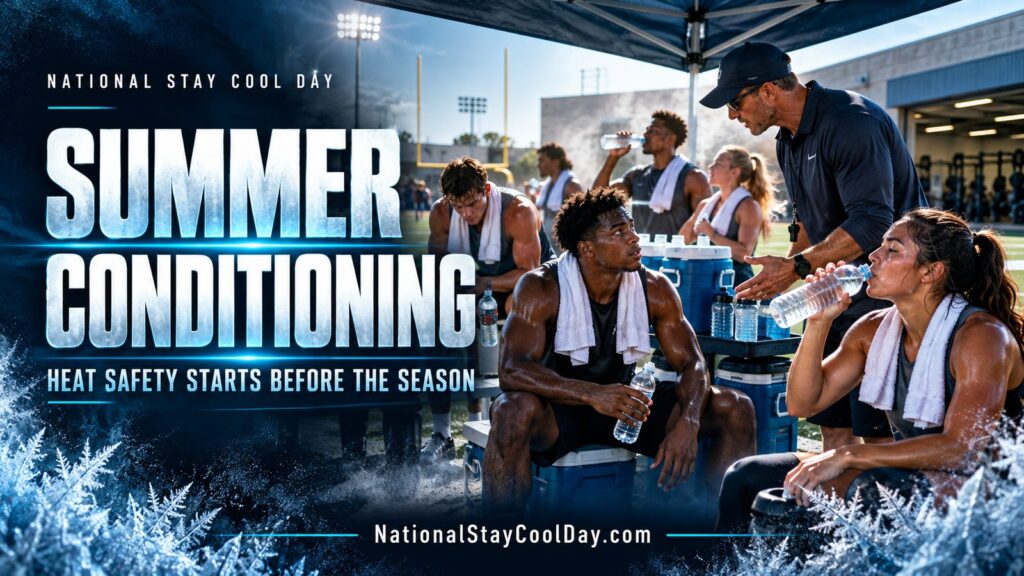
For many athletes, the season does not start on the first official day of practice. It starts weeks earlier with summer weights, open gyms, conditioning runs, 7-on-7 sessions and camps. These workouts are often voluntary, often run by a single coach and often held in the hottest part of the year. They also come before athletes have adapted to the heat.
That combination makes summer workouts one of the highest-risk stretches of the athletic year. This guide explains why, and lists what athletic directors and coaches put in place before the first voluntary session.
Why Summer Workouts Carry Extra Risk
Athletes are not acclimatized
The National Athletic Trainers’ Association (NATA) says athletes adapt to heat gradually over 7 to 14 days, with intensity, duration and equipment increasing step by step. Without heat exposure, that adaptation fades within 3 weeks. Athletes coming off the school year, a spring indoor sport or a family vacation show up to summer workouts unacclimatized.
Intensity runs high
Conditioning tests, timed runs, “gassers” and lifting circuits are built to push athletes. NATA lists high-intensity exercise, poor conditioning and inappropriate work-to-rest ratios among the main risk factors for exertional heat stroke. Peer pressure to keep going is on the same list, and summer sessions where athletes are trying to earn a spot bring plenty of it.
Formal rules often have not kicked in
Many heat policies and acclimatization schedules are written for official preseason practice. Voluntary sessions fall outside that window. Heat stress on the body is the same whether a session is voluntary or required.
Medical coverage is thin
Official practices often have an athletic trainer on site. Summer workouts, open gyms and off-site 7-on-7 events often do not. That leaves recognition and treatment to coaches who have not rehearsed it.
The hottest weeks of the year
Summer workouts run through June and July, the heart of the hot season. A CDC analysis of high school athletes found that most time-loss heat illness occurred in August, the month most schools start preseason. Summer conditioning sits right before and inside that same window.
What Counts as a Summer Session
| Session | Common heat risk | Key control |
|---|---|---|
| Weight room and conditioning | Hot rooms with poor airflow, timed runs and conditioning tests | Cooled or ventilated space, no conditioning tests in the first week, scheduled breaks |
| Open gym | Continuous pickup play, little structure, no set breaks | Set break times, water on the court, a coach watching every session |
| 7-on-7 and passing leagues | Multiple games in one day, turf fields, travel sites | Shade and water at each field, rest between games, a plan for each site |
| Camps and clinics | Long days, multiple sessions, athletes from many programs | Acclimatization schedule, cooling zone, medical staff on site |
| Captain’s practices and informal runs | No adult present, no equipment, no plan | Clear rules on when and where athletes train, and who is in charge |
Put These in Place Before the First Voluntary Session
- Treat summer as acclimatization. Apply your acclimatization schedule to the first two weeks of summer workouts, not just to official practice. Build intensity and duration gradually and hold back full equipment. Make a schedule with the free Acclimatization Schedule.
- Write a heat policy that covers every session. NATA calls for a heat-acclimatization policy and activity guidelines based on wet bulb globe temperature (WBGT). State in writing that the policy applies to voluntary workouts, open gyms, camps and off-site events. Read WBGT for schools.
- Measure the heat on site. Take a WBGT reading before and during each outdoor session, on the surface where athletes train. Adjust breaks, intensity and equipment to the reading, and move sessions earlier or later in the day.
- Post a Heat Rules Card. Put the heat levels, break rules and emergency steps where every coach and volunteer sees them. Make one with the free Heat Rules Card.
- Have the cooling tub on site. NATA calls for cold-water immersion tubs and a rectal thermometer on site, accessible and in working order. That applies to the weight room and the practice field in June just as much as the stadium in September. Read why every practice and event needs a tub on site.
- Build an emergency action plan for each summer site. Summer sessions move to auxiliary fields, middle school gyms and other schools’ turf. NATA says every practice and game site needs its own plan, rehearsed by coaches, athletic trainers and EMS. Build one with the free Emergency Action Plan Builder.
- Train every adult in charge. Every coach, volunteer and camp counselor who runs a session knows the signs of heat stroke and the cooling steps before the first workout.
- Plan rest and fluids. NATA calls for free access to fluids at all times, scheduled breaks in shade or a cooling zone, and permission to remove equipment such as helmets during breaks.
- Screen athletes first. NATA recommends a physician-supervised preparticipation screening that asks about past heat illness. Collect physicals before athletes start summer training, not at the start of the official season.
- Keep sick athletes out. NATA says athletes with a fever, a viral illness or a stomach bug do not participate until it resolves, and are watched closely when they return.
Know the Signs and the Response
Confusion, stumbling, odd behavior, irritability or collapse during or after activity in the heat is heat stroke until proven otherwise, even if the athlete is still sweating.
- Call 911 and start cooling at the same time.
- Put the athlete in a tub of ice water, covering as much of the body as possible, with the head supported above the water.
- Remove anything you can quickly but don’t delay cooling because of gear removal.
- Keep up ice agitation the whole time.
- Start cooling within 10 minutes and cool to about 102°F within 30 minutes, then transport.
Cold towels and ice packs are not enough. Read why cold towels, ice packs and fans don’t treat heat stroke.
Frequently Asked Questions
Do voluntary workouts need a heat policy?
Yes. The body responds to heat the same way whether a workout is voluntary or required. Write your heat policy so it covers every session your program runs or allows.
When does acclimatization start?
On the first day athletes train in the heat. If that is a June conditioning session, that is day one.
Do indoor open gyms need heat rules?
Yes. Gyms without air conditioning get hot and humid, especially with a full court and closed doors. Measure the conditions inside and plan breaks and fluids the same way.
Who should be at summer sessions?
At least one adult trained in recognizing heat stroke and running the cooling steps, with the tub, ice and a phone ready. An athletic trainer on site is the standard to aim for.
Should conditioning tests happen on the first day?
No. Hard conditioning tests on day one put the highest intensity on the least acclimatized athletes. Schedule them after the first two weeks.
National Stay Cool Day Is April 8, 2027
April is the right time to write the summer heat plan, before the first June workout. Sign your school or program up and find more free heat safety tools for schools.
References
- National Athletic Trainers’ Association. Position Statement: Exertional Heat Illnesses. Journal of Athletic Training. 2015;50(9):986-1000. See recommendations 1, 2, 3, 4, 5, 10, 11, 12 and Table 6. pmc.ncbi.nlm.nih.gov/articles/PMC4639891
- Centers for Disease Control and Prevention. Heat Illness Among High School Athletes, United States, 2005-2009. MMWR. 2010;59(32):1009-1013. cdc.gov/mmwr/preview/mmwrhtml/mm5932a1.htm
- National Weather Service. Wet Bulb Globe Temperature: How and when to use it. weather.gov/news/211009-WBGT
This article is for education and planning. It does not replace medical advice. Review all medical steps with your team physician or medical director. In an emergency, call 911.