
School Sports Heat Safety
Heat safety · for coaches, athletic trainers and parents
When it’s hot and an athlete goes down, cool first.
Exertional heat stroke is treated where the athlete falls: in cold water, up to the neck, while 911 is on the way. Here’s what to recognize, what to do and what to have ready before the first whistle.
If it’s happening now
Cool first. Call 911.
- Start whole-body cold-water immersion, up to the neck, right where they are.
- Call 911 while cooling begins.
- Keep cooling until EMS takes over.
Not breathing normally? Call 911, start CPR and use an AED. Nothing in a heat plan delays CPR.
What it looks like
Cold water, up to the neck, right where they are.
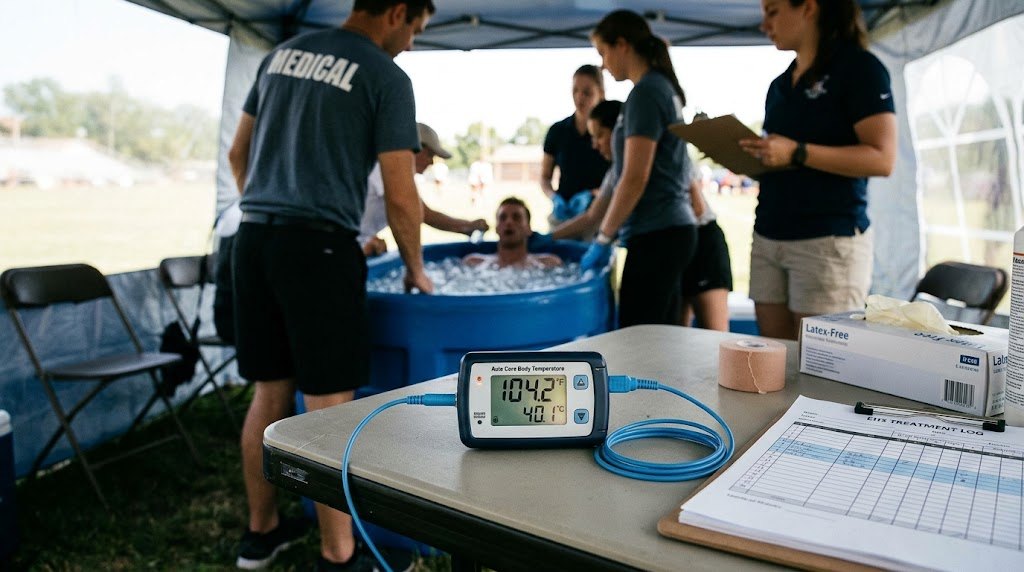
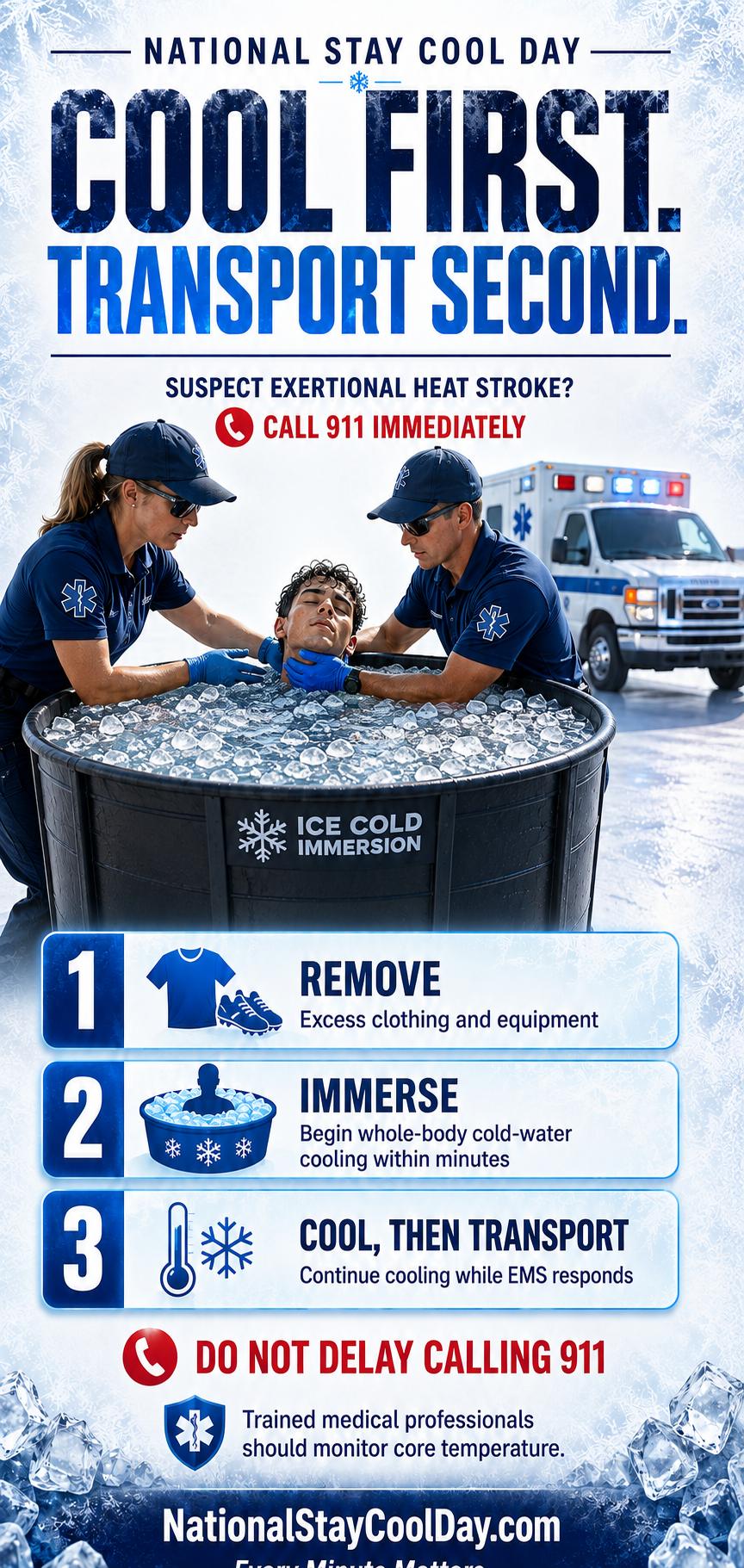
Two scenarios
Think heat and heart, together.
When an athlete collapses, the instinct is to think of the heart first. On a hot day, even one that only reaches a caution level on the heat index, heat stroke belongs in that first thought too. If no one thinks of heat, no one starts cooling.
Scenario one
Unresponsive, not breathing normally
Call 911. Start CPR. Use an AED as soon as one is available.
Scenario two
Breathing, but collapsed, confused or acting strangely in the heat
Suspect exertional heat stroke. Cool first, call 911. Start cold-water immersion up to the neck immediately and keep cooling while help is on the way.
Your athletic trainer and team physician set the medical steps for your school. The Emergency Action Plan Builder keeps cardiac and heat protocols in one plan.
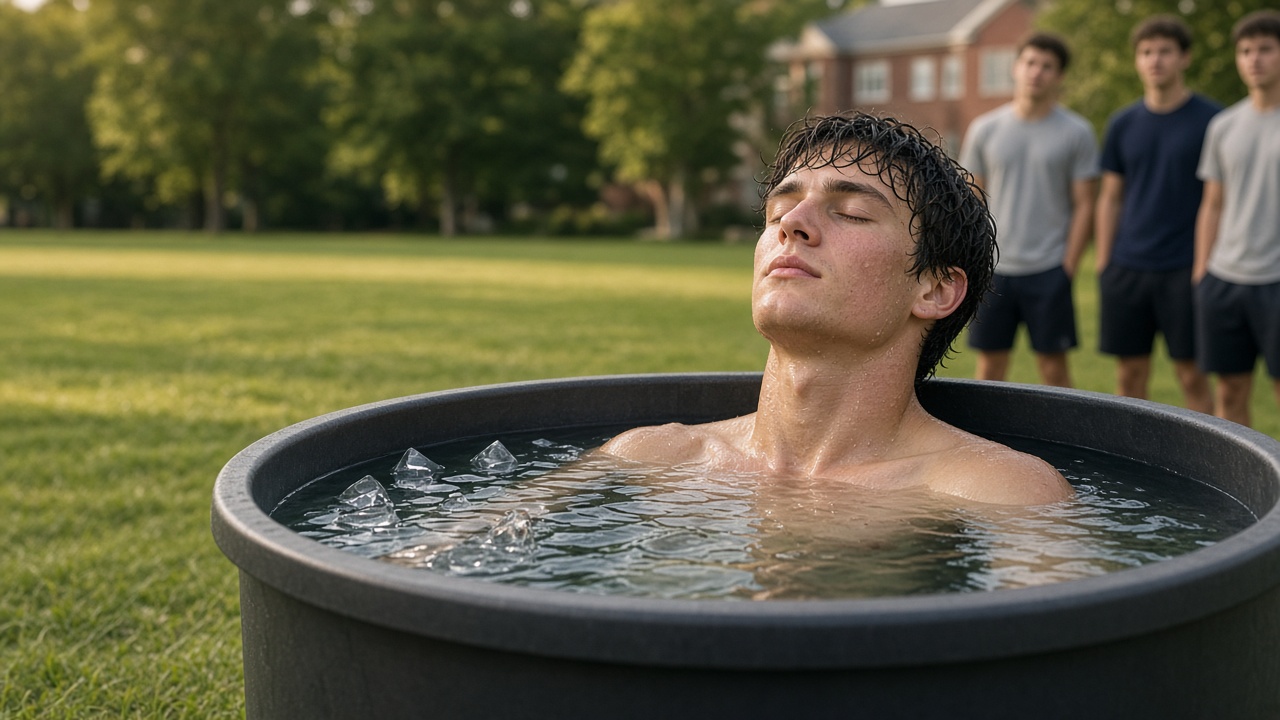
Know the signs
Sweating doesn’t rule it out.
- Confusion or strange behavior
- Stumbling or collapse
- Hot skin, sweaty or dry
- A racing heartbeat
An athlete can be soaked in sweat and still be in heat stroke. When in doubt, cool.
Forehead and ear thermometers can read close to normal while an athlete is in danger. Here’s why trained staff use rectal temperature, and why cooling never waits for a reading.
Before the first whistle
Three things have to exist before the first practice, not after the first collapse.
A tub, filled and in place
On the sideline, not in a storage room. Decide who fills it, who checks the water temperature and where the backup is kept.
A written plan, rehearsed
Every venue, every role, every backup, including what happens if more than one athlete goes down at once. Post it, share it with local EMS and practice it.
People who know their job
Everyone knows their role and who covers it if they’re not there. Posted heat rules mean nobody decides on the fly whether practice goes on.
Prevention comes from heat rules, acclimatization, rest and a written plan. Ease athletes into the season with a dated 14-day acclimatization schedule.
The whole sideline
Heat stroke doesn’t stop at the roster.
Football is where most documented heat stroke deaths in school sports have occurred, and linemen on both sides of the ball have been affected most. But anyone working hard on or around a field on a hot day can overheat.
- Linemen
- The band
- The dance line
- Cheerleaders
- Umpires
- Referees
A heat plan that only covers the football team is an incomplete plan.
For elementary schools
The first move, sized for a seven-year-old.
Spot it.
Learn what heat trouble looks like.
Say it.
Tell a grown-up, right away.
Cool it.
Know that the grown-ups cool first and call 911.
It works the way stop, drop, and roll works: learn it early, say it out loud, act it out. Elementary schools teach it in the classroom and in P.E., with no ice tubs at that level.
For parents
Three questions to ask your school.
- Where is the cooling tub, and who is in charge of it?
- Is there a written emergency action plan for every venue, and when was it last rehearsed?
- If two athletes go down at once, who cools the second one?
If the answers aren’t settled yet, share the free planning tools. No account and no cost.
Go deeper.
- School heat resources The free tools in one place, plus printable sideline cards: the emergency protocol, the warning signs and a heat-ready checklist.
- Emergency Action Plan Builder Venues, people, backups, equipment, heat rules and cooling steps, downloaded with your school’s name on every page.
- Why rectal temperature is the only reliable way to diagnose heat stroke Why other thermometers mislead during hard exercise, and who should take the reading.
- Why National Stay Cool Day is different The implementation gap, the record attempt and how the day will be measured.
Sources
- Society of Critical Care Medicine. Guidelines for the Treatment of Heat Stroke. Critical Care Medicine, 2025;53(2):e490-e500.
- American Heart Association and American Red Cross. 2024 Guidelines for First Aid. Circulation, 2024.
- American Red Cross. Exertional Hyperthermia/Heat Stroke, first aid steps.
- Faculty of Pre-Hospital Care (Royal College of Surgeons of Edinburgh). Consensus Statement on the Pre-Hospital Management of Exertional Heat Illness, November 2024.
- National Center for Catastrophic Sport Injury Research (UNC). Annual Survey of Football Injury Research, 2025 data (published 2026).
This page is for education and preparedness only. It is not a substitute for professional medical advice. In an emergency, cool first, call 911.