November 22, 2026
JV and Freshman Teams: Heat Safety for the Squads With the Fewest Adults
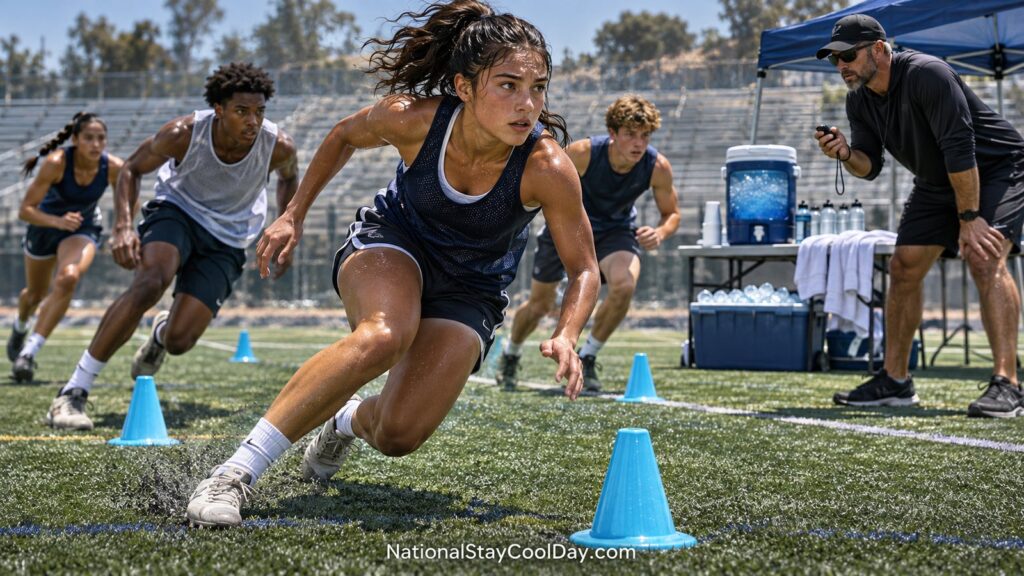
Most heat plans are written with the varsity team in mind. The athletic trainer stands on the varsity sideline, the cooling tub sits by the main field and the head coach knows the plan by heart. Meanwhile the JV and freshman teams are often practicing on the far field, at a different time, with one or two coaches and a few water jugs.
Younger players are usually the newest to hot practices and the least likely to speak up when they feel sick. This guide is about making sure the plan covers every squad in the program, not only the one with the most adults around it.
Where the Gaps Usually Are
Walk through a normal practice day for your JV and freshman teams and look for these:
- The far field. The younger teams get whatever space is left, which can be a long walk or drive from the gym, the ice machine and the main entrance.
- The hottest slot. When the varsity has the field early, the younger teams may get the middle of the afternoon.
- Fewer adults. One coach may be running drills, watching every player and holding the only phone. At many schools the athletic trainer is with the varsity or at a game across town.
- Newer athletes. Freshmen may be in their first season of hot practices, in new equipment, trying to make a good first impression.
- Away games without help. A JV game at another school or a road trip on a weeknight may have no medical staff at all.
One Plan, Every Team
Write your emergency action plan so it names every team and every practice site. For each one, list who is in charge of heat safety that day, who calls 911, where the cooling tub is and how the ambulance gets in. Our free emergency action plan builder walks you through those pieces.
If the JV team practices on a different field from the varsity, it needs its own cooling setup at that field. A tub by the main field does not help a player who goes down a quarter mile away. Our cooling station checklist lists what to set up, and the free Heat Rules Card lets you make one card for each venue with the address, the ambulance entrance and the tub location.
Give the JV Coach the Same Tools
The coach running the younger team needs the same information and the same say as the head coach.
- The heat call. Make sure the JV coach can see the same weather and heat readings the varsity uses and has clear permission to shorten practice, add breaks or move inside. Our guide to WBGT for schools explains how those calls are made.
- Training. Every coach on staff, including part-time and volunteer assistants, should know the warning signs and the cooling steps before the first practice.
- A second adult. If you can, put two adults with every team. One can keep running practice while the other handles a sick player or meets the ambulance.
- Help from students. Trained student managers can fill the tub, bring water and run to the gate.
Ease Newer Athletes Into the Heat
Many freshmen are coming from middle school sports, summer off or no sport at all. Their bodies have not adjusted to hard work in the heat yet. Build up practice length and intensity over the first weeks, and add equipment slowly. Our guide on heat acclimatization explains why the first two weeks matter so much.
Younger players are also the most likely to hide how they feel. They want to make the team, keep up with older players and not look weak. Tell them on day one that stepping out when they feel sick is part of the plan, and that telling a coach about a teammate is the right thing to do. Our post on middle school sports has more on kids who won’t speak up.
Know the Signs
Heat stroke affects the brain, so the most important sign is a change in how an athlete thinks or acts in the heat. Watch for a player who collapses, seems confused, stumbles, can’t answer simple questions or acts unlike themselves. A player who is still sweating can still be in heat stroke. When in doubt, treat it as heat stroke. See our guide to exertional heat stroke symptoms.
If a Player Goes Down
Exertional heat stroke is 100% survivable when the athlete is cooled fast, on site. That is true on the far field as much as the main field. Everyone on every staff should know these steps:
- Call 911 and start cooling at the same time. One adult calls. Everyone else gets the athlete to the tub. Our guide to calling 911 for heat stroke covers what to say.
- Cool first, transport second. The athlete goes into a cold-water immersion tub with ice agitation, which means keeping the ice and water moving around them. Keep the athlete’s head above the water. Take off whatever gear comes off quickly, but never delay cooling for gear removal.
Cooling should start within 10 minutes. The goal is to bring body temperature down to about 102°F within 30 minutes, because at 104°F the body loses its ability to regulate its own temperature. Cold towels, ice packs and fans do not treat heat stroke. Read more on why cold towels don’t treat heat stroke and cool first, transport second.
While one coach handles the emergency, someone else has to look after the rest of the team. Move them to shade and water and keep an eye on them. Players who worked just as hard in the same heat can get sick too.
Run the Drill With the Younger Teams Too
A drill on the far field is where you find out the tub is empty, the gate is locked or the JV coach doesn’t know the address. Run a heat stroke drill with each team’s staff, at the field where that team actually practices.
Questions for Your Program
- Where is the nearest cooling tub to the field where your freshman team practices today?
- Who is in charge of heat safety at a JV away game with no athletic trainer?
- Does every JV and freshman coach have the authority to stop practice for heat?
- Could a first-year assistant give 911 the address and the right entrance for the far field?
National Stay Cool Day on April 8, 2027 is a good day to walk every practice site with every coach in your program. See what the day looks like on our National Stay Cool Day 2027 page.
Take the next step: build your heat emergency action plan with our free heat safety tools, then sign up your school for National Stay Cool Day on April 8, 2027. Both are free.