
November 21, 2026
Middle School Sports Heat Safety: First Seasons, New Coaches and Kids Who Won’t Speak Up
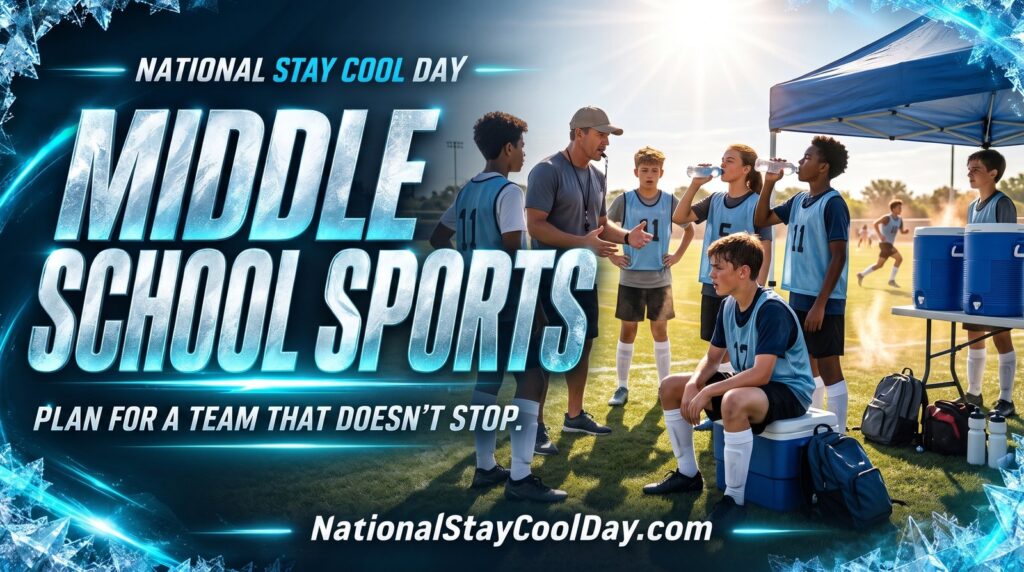
Middle school is where a lot of kids play their first real season. Practices get longer, coaches push harder, and many players have never trained through a hot week before. The adults are often new too: a teacher coaching for the first time, a parent helping out, a school with no athletic trainer on the field every day.
Exertional heat stroke is 100% survivable when the athlete is cooled fast, on site. That depends on a plan the adults set up before the first hot practice, because a 12-year-old is not going to stop and say they feel wrong.
Why Middle School Is Different
- First seasons. Many players are new to the sport and new to practicing in the heat. Their bodies have not adjusted yet.
- Kids push to keep up. Younger athletes want to make the team and impress the coach. They rarely ask to sit out.
- New coaches. Some coaches have never been walked through a heat emergency. That is a training gap, not a character flaw, and it is easy to fix.
- Less medical help on site. Many middle schools share an athletic trainer with the high school or have none at practice. The coach may be the first and only responder.
- Afternoon practices. Practice often starts right after the last bell, which can be the hottest part of the day.
Before the First Hot Practice
- Ease players into hard work and full gear over the first two weeks. Read why the first two weeks matter.
- Write an emergency action plan for every field and gym you use. Our free emergency action plan builder gives you a finished plan in your school’s name, including a section for more than one athlete going down.
- Put names next to jobs: who calls 911, who starts cooling, who meets the ambulance. If the athletic trainer is not there, the plan still has to work.
- Set up a cold-water immersion tub with ice before practice starts, close to where the team works. Our cooling station checklist lists what to have ready.
- Know the school address and the gate an ambulance would use, and make sure it is unlocked during practice.
- Check your state association or district heat rules for when to change, shorten or stop practice. MISSING: middle school heat stop rules vary by state and district and were not verified here; follow your state association or district.
Everyday Habits That Protect Younger Athletes
- Check heat and humidity before practice, not just in the morning. Our WBGT guide explains how to measure it, and humidity and practice explains why a muggy day can be worse than a hotter, drier one.
- Build water and shade breaks into practice so no one has to ask. Kids will not always speak up.
- Ask at the start of practice if anyone has been sick, skipped lunch, slept badly or started a new medicine.
- Give one adult the job of watching players, not drills. New players and players who are working hardest need extra attention.
- Teach players that telling a coach “my teammate looks off” is the right call. Our guide on looking out for teammates is written for athletes.
Signs to Watch For
The most important sign is a change in how the brain is working. Act right away if a player:
- seems confused, gives strange answers or forgets things they know
- stumbles, loses balance or can’t keep up
- acts out of character, gets cranky or seems “out of it”
- collapses or has a seizure
They may still be sweating. Sweat does not rule out heat stroke. A younger athlete may also just say they are tired or that their stomach hurts. When in doubt, treat it as heat stroke. For the full list, read exertional heat stroke symptoms every coach and parent should know, and see how heat stroke differs from heat cramps.
If a Player Goes Down
- Stop practice and get to the player.
- Call 911 and start cooling at the same time. One person calls. Another starts cooling.
- Cool first, transport second. Cooling should start within 10 minutes. The goal is to bring body temperature down to about 102°F within 30 minutes.
- Use cold-water immersion with ice agitation. Get the player into the tub and keep the ice and water moving around them. See cold-water immersion for schools.
- Remove anything you can quickly but don’t delay cooling because of gear removal.
- Send someone to meet the ambulance at the gate and lead the crew straight to the player.
- Call the family once cooling has started and 911 is on the way.
Why the rush: at 104°F, the body loses its ability to regulate its own temperature. Cold towels and ice packs are not enough. Read why cold towels don’t treat heat stroke and cool first, transport second.
Walk Through It Once
Before the season, walk the plan once with every coach and helper. Time how long it takes to get the tub filled and the ice to the field. Practice who calls 911 and who starts cooling. A new coach who has done it once will move faster when it counts.
After a player has heat stroke, coming back takes a doctor’s clearance and a slow return. Our guide to return to play after heat stroke covers what that looks like.
What Parents Can Ask
Parents of middle schoolers can ask the coach where the cooling tub is, who makes heat calls and what happens if the athletic trainer is not at practice. Start with our list of heat safety questions parents should ask and our parent prep guide for hot practices.
Bring Your School Into National Stay Cool Day
National Stay Cool Day is April 8, 2027. Middle schools, coaches and youth programs can take part. Here’s how schools and programs can sign up.