
November 22, 2026
Weekend and Holiday Practices: A Heat Plan for When the School Is Closed
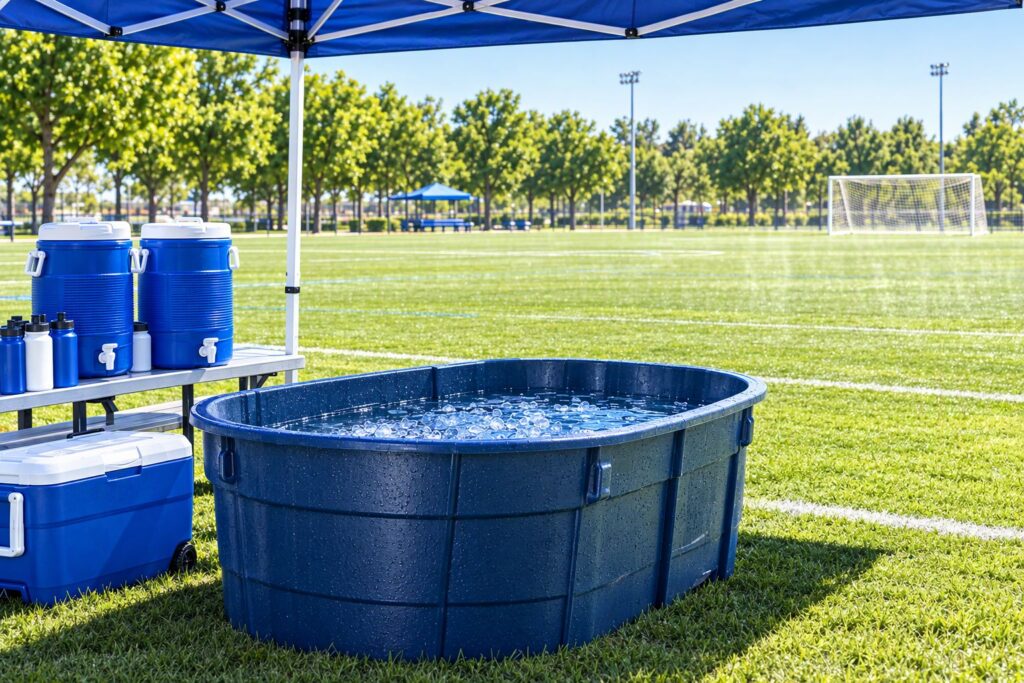
On a school day, a coach has a building full of help behind them. The front office knows the address, the nurse is down the hall, the ice machine is unlocked and somebody can open the back gate for an ambulance. On a Saturday, a holiday or a summer week, most of that is gone. The doors are locked and the coach may be the only adult on campus.
Summer workouts, preseason weekends and holiday sessions all fall when the school is quiet, and many of them are hot. This guide is about keeping your heat plan working when the building is closed.
What Changes When the Building Is Closed
Walk through a weekend practice and look for what usually comes from the school itself:
- Locked doors and gates. The ice machine, the training room and the gate the ambulance would use may all be locked.
- No one in the office. There is no one to meet the ambulance at the main entrance or look up a parent’s phone number.
- Fewer adults. The athletic trainer, the nurse and the other coaches may be off for the day. A single coach can end up running practice alone.
- Athletes coming back from a break. After a long weekend or a holiday week, players may not be used to the heat the way they were.
Plan for the Closed Days Ahead of Time
Your emergency action plan should say what happens when the school is closed, not only during the school week. For each weekend or holiday practice, write down who is in charge of heat safety, who calls 911, where the cooling tub is, where the ice comes from and how the ambulance gets onto campus. Our free emergency action plan builder walks you through those pieces.
Ask your school who holds the keys on closed days. The coach running practice should be able to open the gate the ambulance would use and reach the ice. If not, the plan should name who can, with a phone number that will be answered that morning.
Print a Heat Rules Card for each field and gym the team uses. On a quiet day, the card does the front office’s job: the street address, the ambulance entrance and the tub location in one place.
Set Up the Cooling Station Before Anyone Runs
On a closed day, there is nobody to run back for supplies once practice starts. Fill the tub with water and have ice ready before the first drill, and bring enough water for the whole session. Our cooling station checklist lists what to set up.
If the ice machine will be locked, plan where the ice comes from the day before. Some programs fill coolers on Friday afternoon; others have a parent pick up bags on the way in. Write it into the plan so it never depends on one person remembering.
Make the Heat Call Without the Usual Help
On a weekend, the coach on the field often makes the heat call alone. Every coach who runs a closed-day practice should be able to check the program’s heat readings and have clear permission to cut practice short, add breaks or move it to a cooler time. Our guide to WBGT for schools explains how those calls are made.
Plan for a second adult whenever you can. One person can keep the rest of the team safe while the other handles a sick athlete or meets the ambulance at the gate. A trained student manager can help fill the tub, bring water and run to the entrance.
Ease Athletes Back In After a Break
A holiday week or a long weekend off can leave athletes less ready for hard work in the heat. Build the first sessions back up instead of starting where you left off, and give extra breaks in shade with water. See our guides on heat acclimatization and on summer conditioning and open gyms.
Know the Signs
Heat stroke affects the brain, so the most important sign is a change in how an athlete thinks or acts in the heat. Watch for a player who collapses, seems confused, stumbles, can’t answer simple questions or acts unlike themselves. A player who is still sweating can still be in heat stroke. When in doubt, treat it as heat stroke. See our guide to exertional heat stroke symptoms.
If a Player Goes Down
Exertional heat stroke is 100% survivable when the athlete is cooled fast, on site. That is just as true on a quiet Saturday as on a school day. Everyone on every staff should know these steps:
- Call 911 and start cooling at the same time. One adult calls. Everyone else gets the athlete to the tub. Our guide to calling 911 for heat stroke covers what to say.
- Cool first, transport second. The athlete goes into a cold-water immersion tub with ice agitation, which means keeping the ice and water moving around them. Keep the athlete’s head above the water. Take off whatever gear comes off quickly, but never delay cooling for gear removal.
Cooling should start within 10 minutes. The goal is to bring body temperature down to about 102°F within 30 minutes, because at 104°F the body loses its ability to regulate its own temperature. Cold towels, ice packs and fans do not treat heat stroke. Read more on why cold towels don’t treat heat stroke and cool first, transport second.
On a closed day, someone also has to get the ambulance to the athlete. Send a second adult or a student manager to the gate, unlock it if it is locked and wave the crew in. Then someone has to look after the rest of the team. Move them to shade and water and keep an eye on them. Players who worked just as hard in the same heat can get sick too.
Run the Drill on a Closed Day
A drill on a quiet Saturday is where you find out the ice machine is locked, the gate key is in someone’s desk or the coach doesn’t know the street address. Run a heat stroke drill once with only the adults who would actually be there.
Questions for Your Program
- Who can open the ambulance gate at your practice field on a Saturday morning?
- Where does the ice come from if the ice machine is locked?
- Could every coach give 911 the street address and the right entrance without calling anyone first?
National Stay Cool Day on April 8, 2027 is a good day to walk your fields with every coach and talk through what changes when the school is closed. See what the day looks like on our National Stay Cool Day 2027 page.
Take the next step: build your heat emergency action plan with our free heat safety tools, then sign up your school for National Stay Cool Day on April 8, 2027. Both are free.