
November 15, 2026
Cricket Heat Safety: Long Innings, Pads and Helmets in the Summer Sun
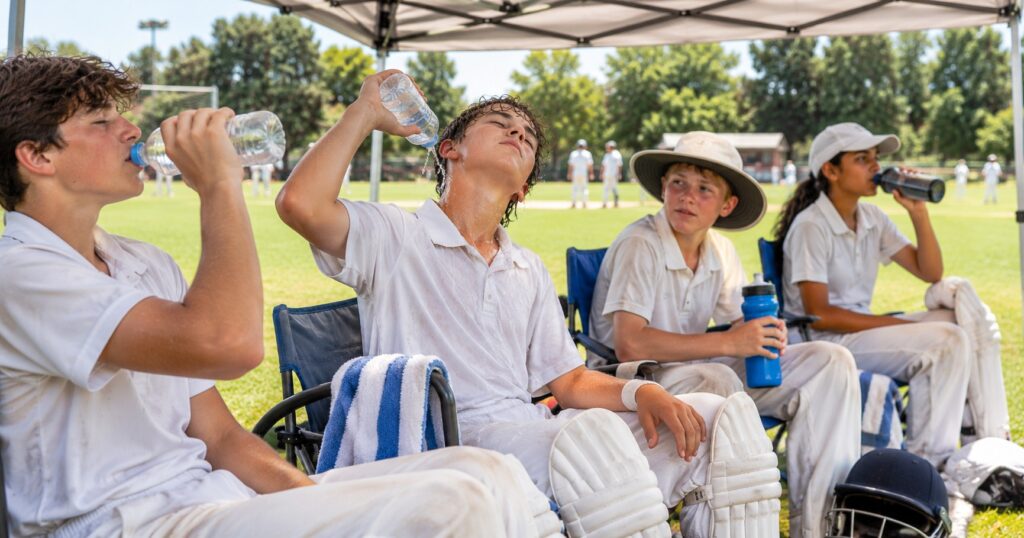
Cricket is growing fast with young players in the U.S., and much of it is played in summer. A youth match can take a whole afternoon. Some formats run all day. Fielders stand in open sun for long stretches, bowlers sprint in over and over, and batters and wicketkeepers play in pads, gloves and a helmet. Many clubs are run by parent volunteers on public park fields with little shade.
Exertional heat stroke is 100% survivable when the athlete is cooled fast, on site. This guide is for club organizers, coaches, team managers and parents who want a heat plan at the ground before anyone needs it.
Why Heat Gets Missed in Cricket
- The game feels slow. Between balls, players stand still, so people think the work is light. But bowlers run hard every over, batters sprint between the wickets, and fielders chase the ball in full sun.
- Matches are long. Heat builds over hours, not minutes. A player who felt fine at the start can be in trouble late in an innings.
- Batters and keepers are covered up. Pads, gloves, a thigh guard and a helmet protect against the ball, and they also hold heat close to the body. The wicketkeeper crouches and rises on every ball.
- Shade is far away. Park grounds are big and open. The nearest shade may be a tree or a pop-up tent at the boundary.
- Players don’t want to come off. A batter who is set or a bowler in the middle of a spell may not want to leave the field, and may hide that they feel sick.
Before the Season
- Know how hot your ground gets. Check heat stress at the field, not just the forecast for your town. Our WBGT guide explains how to measure it and what the numbers mean.
- Write down your heat rules. Decide ahead of time what conditions mean shorter matches, more drinks breaks, an earlier start or calling off the day. Then no one has to make the call in the middle of an innings.
- Have a cold-water immersion tub at the ground. Know where it sits, who fills it and where the ice comes from. Put it near the players’ area, in a spot an ambulance can reach. Our cooling station checklist covers what to have ready, and why every event needs a tub explains why.
- Build an emergency action plan for your ground. Name who calls 911, who starts cooling, who meets the ambulance at the park entrance and where the tub is. Our free emergency action plan builder gives you a finished plan in your club’s name.
- Ease players into summer cricket. Players coming back from a break need time to get used to the heat. Read why the first two weeks matter.
On Match Day
- Start early in the day when you can, and avoid the hottest hours.
- Set up shade and water for the batting side, and keep water near the boundary for fielders, not only at the clubhouse or car.
- Take regular drinks breaks, and take more of them on hot days.
- Let batters waiting to go in, and the keeper between innings, take off pads, gloves and helmets and sit in the shade.
- Rotate fielders out of the hottest spots, and share bowling so no one bowls a long spell in the heat.
- Watch players who are new, very young, coming back from time off or recently sick.
- Tell players, out loud and often, that coming off the field because they feel sick is the right call. No one gets in trouble for speaking up, and teammates should speak up for each other too. Share our guide on looking out for teammates.
Parents can help before match day. Share our parent prep guide so players show up rested, fed and drinking water. For tournament weekends with more than one match a day, our guide to multi-game tournament days has more ideas.
Know the Signs
The sign that matters most is a change in how the brain is working. Watch for a player who is confused, loses track of the score or their field position, stumbles, gives strange answers or seems “out of it.” Collapse or a seizure is an emergency. A player with heat stroke may still be sweating. If something seems off, treat it as heat stroke. Read exertional heat stroke symptoms every coach and parent should know.
On a big field, a fielder at the boundary can be a long way from the adults. Keep an eye on players far from the middle, and have umpires and captains watch for anyone who slows down or stops moving well.
When a Player Goes Down
- Call 911 and start cooling at the same time. One adult calls and gives the exact park address and the entrance the ambulance should use. Another gets the player to the tub.
- Cool first, transport second. Get the player into the cold-water immersion tub as fast as you can.
- Use ice agitation. Keep the ice and water moving around the player. Take off the helmet, pads and anything else you can quickly, but don’t delay cooling because of gear removal.
- Stop the match and have another adult keep the other players and families back.
- Send someone to meet the ambulance at the park entrance and lead the crew to the player.
- Call the player’s parents if they are not already there, once cooling is going and help is on the way.
Cooling should start within 10 minutes. The goal is to bring body temperature down to about 102°F within 30 minutes, because at 104°F the body loses its ability to regulate its own temperature. Cold towels and ice packs are not enough. Read cool first, transport second and why cold towels don’t treat heat stroke.
Practice these steps with your coaches and volunteers before the season starts. Our guide to running a heat stroke drill shows how.
Bring Your Club Into National Stay Cool Day
National Stay Cool Day is April 8, 2027. Cricket clubs, schools, teams and youth programs can take part. Here’s how schools and programs can sign up.