
November 21, 2026
Volleyball Heat Safety: Hot Gyms, Sand Courts and Long Tournament Days
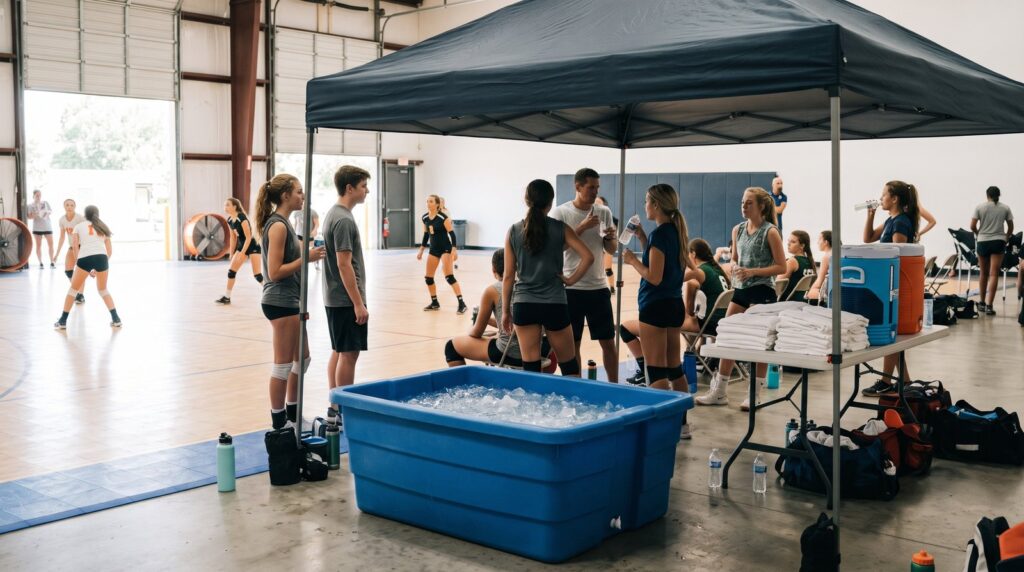
Volleyball doesn’t look like a heat sport. There are no pads, the games are short, and a lot of it happens indoors. But high school seasons start in late summer, many school gyms have no air conditioning, club tournaments keep players in hot buildings from early morning into the evening, and sand courts sit in full sun with nowhere to hide.
Exertional heat stroke is 100% survivable when the athlete is cooled fast, on site. That takes a plan, a cooling tub and people who know their jobs, set up before the first serve.
Where the Heat Risk Comes From
- Gyms without air conditioning. A closed gym in August can hold heat and humidity all day, and it often gets worse as the day goes on. Our guide to heat safety in indoor gyms covers this in detail.
- Preseason. The first weeks of practice land in the hottest part of the year, before players have adjusted. Read why the first two weeks matter.
- Club tournament days. Pool play, then bracket play, then a long wait, then another match. Players can be on site most of the day with little real rest. See our guide to multi-game days.
- Sand courts. Beach and sand volleyball is played in direct sun, often in the middle of the day, on sand that gets hot and makes every move harder.
- Conditioning. Sprints, jump sets and line drills in a hot gym can push players hard in a short time.
Before the Season
- Write an emergency action plan for your home gym, every away gym and any sand courts you use. Our free emergency action plan builder walks you through it.
- Find out which gyms you play in have air conditioning and which don’t. Plan practice times around it.
- Decide who makes heat calls, who calls 911 and who runs the cooling tub. Write the names down.
- Follow your state association or league rules for practice in the heat. Rules differ, so check yours.
- Run a drill. Practice getting a player from the court to the tub, including from a gym with doors, halls or stairs in the way.
Before Every Hot Practice or Match
- Check the conditions inside the gym, not just the forecast outside. Heat and humidity together matter more than temperature alone. Our WBGT guide explains how to measure it.
- Fill a cold-water immersion tub with ice and set it up close to the court. In a gym, that may mean a hallway, a side door or the training room, as long as it’s close and everyone knows where it is. Our cooling station checklist covers what to have ready.
- Open doors and run fans where you can, and put water on the bench before players arrive.
- Know the building address and which door an ambulance would use. At a big tournament venue, know the court number too.
- Ask players if anyone has been sick, is on new medicine, slept badly, or hasn’t eaten or had much to drink.
During Practice and Matches
- Build water breaks into practice, and use every timeout and the time between sets.
- Between tournament matches, get players out of the hottest part of the building and off the sand. Shade and rest count as much as water.
- Never use conditioning as punishment in the heat.
- Assign one adult to watch players, not the match. Players who are new, just back from being sick or playing their third or fourth match of the day need extra attention.
- Make it normal for a player to say “I don’t feel right” or speak up for a teammate. Read our guide for athletes on looking out for teammates.
Signs to Watch For
The sign that matters most is a change in how the brain is working. Act right away if a player:
- seems confused, gives strange answers or loses track of the rotation
- stumbles, loses balance or can’t keep up
- acts out of character, gets irritable or seems “out of it”
- collapses or has a seizure
They may still be sweating. Sweat does not rule out heat stroke. For the full list, read exertional heat stroke symptoms every coach and parent should know.
If a Player Goes Down
- Stop play and get to the player.
- Call 911 and start cooling at the same time. One person calls. Another starts cooling.
- Cool first, transport second. Cooling should start within 10 minutes. The goal is to bring body temperature down to about 102°F within 30 minutes.
- Use cold-water immersion with ice agitation. Get the player into the tub and keep the ice and water moving around them.
- Remove anything you can quickly but don’t delay cooling because of gear removal.
- Send someone to meet the ambulance at the door and lead the crew straight to the player.
Why the rush: at 104°F, the body loses its ability to regulate its own temperature. Cold towels and ice packs are not enough. Read why cold towels don’t treat heat stroke and cool first, transport second.
For Parents
Before a long tournament day, ask the club or tournament director whether the gym is air conditioned, where the cooling tub is and who calls 911. Our list of heat safety questions parents should ask is a good place to start, and our parent’s prep guide covers sleep, food and drinks before hot game days.
Bring Your Team Into National Stay Cool Day
National Stay Cool Day is April 8, 2027. Volleyball programs, clubs, schools and leagues can all take part. Here’s how schools and programs can sign up.