
November 21, 2026
Recess Heat Safety: A Plan for Playground Duty on Hot School Days
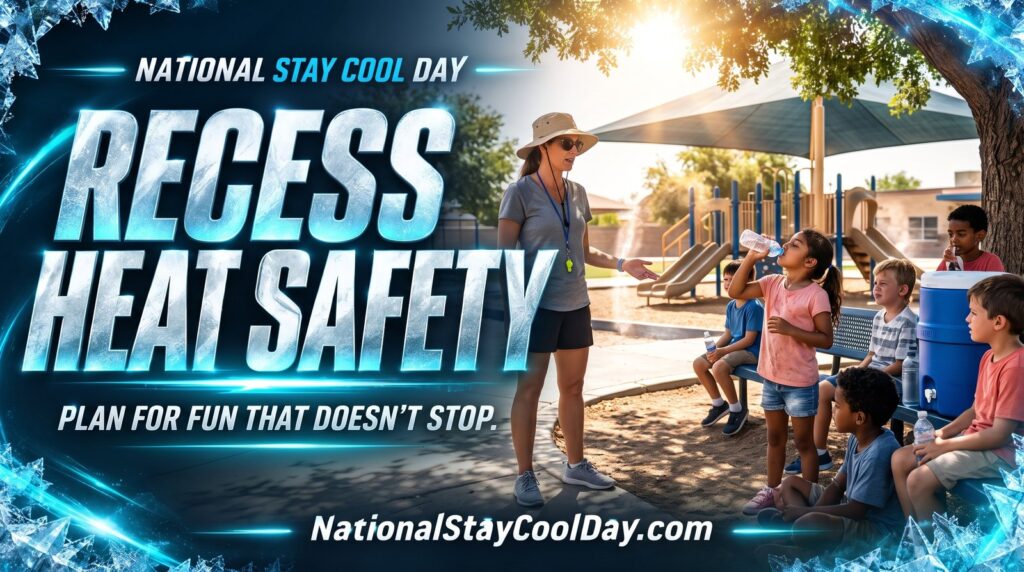
Recess is the part of the school day most kids look forward to. It is also the part of the day when a playground full of young children run as hard as they can, on blacktop and open grass, often right after lunch and often with little shade.
Our field day heat guide covers the one big day outside each year. This guide is for the other days: the ordinary lunch recess and morning break, and the teachers, aides, lunch staff and volunteers who are on playground duty when the weather turns hot.
Why Recess Needs a Heat Plan
Kids don’t pace themselves
Tag, kickball and races across the field go nonstop until the bell. Young children don’t always notice when they are getting too hot, and they rarely stop on their own to drink.
Young children may not speak up
A child who feels sick may think they will get in trouble for leaving a game, or may not have the words to say what is wrong.
The adults on duty aren’t coaches
Playground duty is often covered by classroom teachers, aides, lunch staff or parent volunteers, with a lot of children for each adult.
The day adds up
A class may have outdoor PE in the morning, recess at lunch and an after-school program on the same playground in the afternoon. Count the whole day, not just one block of time.
Before the Hot Days Come
- Decide who makes the call. Know who decides when recess gets shorter, moves to a shaded area or moves inside, and follow your district’s rules for outdoor activity in heat.
- Build the plan. Our free emergency action plan builder gives you a finished plan in your school’s name. Include the playground, not just the athletic field, and plan for more than one child going down at once.
- Put names next to jobs. For every recess period, know who calls 911, who starts cooling, who meets the ambulance and who stays with the rest of the children.
- Know where the cooling tub and ice are. Everyone on duty should know where they are kept and how fast they can get to the playground. Our cooling station checklist lists what to have ready.
- Give every adult on duty a short card. Three things: the signs of heat stroke, who to radio or call, and where the tub is.
- Know the address and the gate. Write down the school’s street address and the entrance closest to the playground that an ambulance should use.
On a Hot Day at Recess
- Check the conditions before recess, not after. Our WBGT guide explains how schools can measure heat, and humidity and heat explains why a muggy day can be worse than it looks.
- Bring water outside. Don’t count on one fountain across the playground. Let kids carry water bottles out or set a jug in the shade.
- Use the shade you have. Set up quieter games, sidewalk chalk or reading in the shaded spots.
- Call water breaks. Blow the whistle partway through recess for everyone to drink, even the kids in the middle of a game.
- Know which kids need a closer eye. Ask teachers to mention any child who skipped breakfast or lunch, has been sick lately or seems tired.
- Tell kids the rule. If you feel dizzy, sick or strange, tell a grown-up right away. You will not be in trouble. If a friend looks wrong, tell a grown-up too.
Signs to Watch For in Young Kids
Heat stroke affects the brain, so the most important sign is a change in how a child thinks or acts in the heat. Act right away if a child seems confused, can’t answer simple questions, stumbles or can’t keep up, suddenly goes quiet or cranky, says they feel sick or throws up, or collapses. A child who is still sweating can still be in heat stroke. When in doubt, treat it as heat stroke. Our guide to exertional heat stroke symptoms covers the signs in more detail.
Have a Plan Before Someone Goes Down
Exertional heat stroke is 100% survivable when the person is cooled fast, on site. That only happens when the plan is in place before the first hot recess of the year. Everyone on playground duty should know these steps:
- Stop and get help. Get to the child, call for another adult by radio or phone, and don’t leave the child alone.
- Call 911 and start cooling at the same time. One person calls and gives the exact address and the entrance an ambulance should use, such as the gate nearest the playground.
- Cool first, transport second. The student goes into a cold-water immersion tub with ice agitation, which means keeping the ice and water moving around them. Keep the child’s head above the water. Take off extra gear and clothing if you can do it quickly, but don’t delay cooling because of gear removal.
- Meet the ambulance. Someone waits at the right entrance and leads the crew straight to the child.
- Take care of the other children. Another adult moves the rest of the group to shade and water, checks on them and lets the office know.
Cooling should start within 10 minutes. The goal is to bring body temperature down to about 102°F within 30 minutes, because at 104°F the body loses its ability to regulate its own temperature. Water, shade and fans help prevent heat illness, but they do not treat heat stroke, and neither do cold towels or ice packs. Read more on why cold towels don’t treat heat stroke and cool first, transport second.
Questions for Your School
- Does every adult who covers recess, including substitutes and volunteers, know the signs of heat stroke and where the cooling tub is?
- How would an adult on the far side of the playground call for help, and how long would it take to get the tub and ice there?
- Who decides when recess changes on a hot day, and how does everyone on duty find out?
Walk through the plan with everyone on the recess schedule before the warm months. Our guide to running a heat stroke drill shows how to practice it.
Teach It to the Kids
Children can learn the words “cool first, transport second” as easily as stop, drop and roll. Our lesson on teaching kids cool first, transport second makes it simple, and our coloring pages work well in the classroom.
National Stay Cool Day on April 8, 2027 is a good day to bring recess staff into the same Cool First training as your coaches. See what the day looks like for K-8 schools.
Take the next step: build your heat emergency action plan with our free heat safety tools, then sign up your school for National Stay Cool Day on April 8, 2027. Both are free.