
November 15, 2026
Back From Being Sick: Heat Risk the First Hot Days After a Fever or Stomach Bug
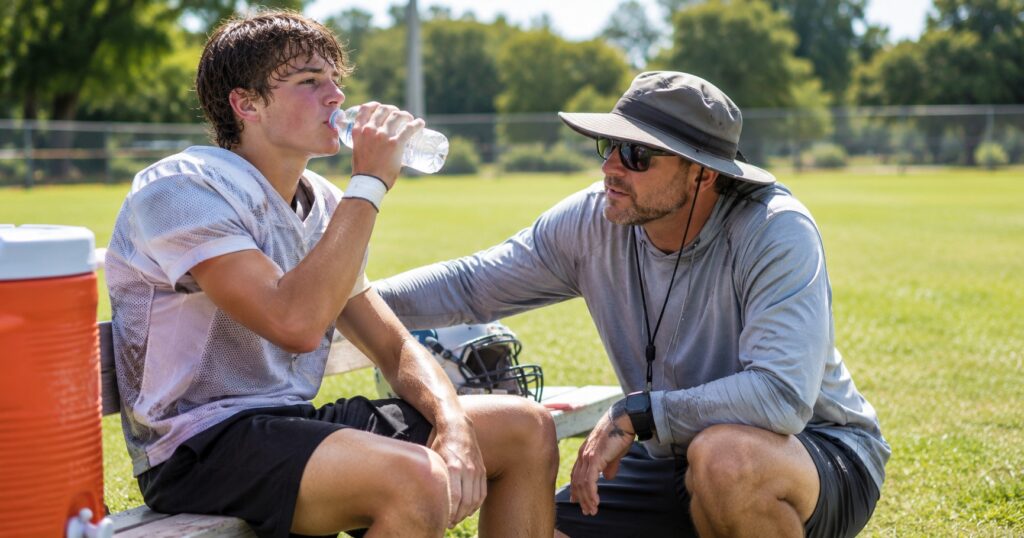
A player misses two days with a fever or a stomach bug, feels better, and shows up to a hot practice ready to go. Coaches are glad to see them. The player wants to prove they’re fine. It’s one of the most ordinary moments in youth sports, and it’s one of the times heat is most likely to catch someone.
Exertional heat stroke is 100% survivable when the athlete is cooled fast, on site. This guide is for coaches, athletic trainers, school nurses, parents and athletes who want to handle the first hot days back after an illness the right way.
Why the First Days Back Are Risky
- The body starts the day low on fluid. Vomiting, diarrhea, a fever and a few days of not eating or drinking much all leave a player behind on fluids. Practice in the heat drains them further.
- A fever adds heat. A player who still runs a fever, or just got over one, starts practice warmer than everyone else.
- Some medicines matter. Certain cold and allergy medicines and other drugs can change how the body handles heat or fluid.
- Time off undoes some heat readiness. A few days on the couch in air conditioning can leave a player less used to the heat than the teammates who kept practicing.
- Players hide it. Nobody wants to lose their spot. A player who missed time may push harder, skip water breaks and say “I’m good” when they aren’t.
For Coaches and Athletic Trainers
- Ask every player who was out sick. Make it a habit, not a punishment: “Were you sick? Any fever, throwing up or diarrhea? Are you eating and drinking normally? Taking any medicine?” A quick talk before practice is enough.
- Check with your athletic trainer or school nurse. If you have medical staff, they make the call on whether the player practices and how much. Follow your school’s or league’s policy on returning after illness.
- Ease them back in. On a hot day, a player just back from being sick shouldn’t run the hardest drills or the conditioning at the end. Give them more rest and water breaks, keep them out of full gear when you can, and watch them closely. Read why heat acclimatization matters.
- Put them on someone’s watch list. Tell an assistant coach or a trusted teammate to keep an eye on that player all practice.
- Don’t run “make-up” punishment. Extra sprints for missed practice is exactly the wrong move on a hot day. If you need conditioning, see our guide to conditioning tests in the heat.
- Know your heat numbers that day. Our WBGT guide explains how to check heat stress at the field.
For Parents
- Tell the coach. A short text works: “She had a fever Tuesday and is just eating again today.” Coaches can’t adjust what they don’t know about.
- Get fluids and food back in first. A player who still isn’t eating or drinking normally isn’t ready for a hot practice.
- Keep a player with a fever home. If they’re still running a fever, they aren’t ready to train in the heat. Ask your child’s doctor when to go back if you aren’t sure.
- Tell the coach about any medicine your child is taking, including cold and allergy medicine from the store. Ask your doctor or pharmacist whether it affects heat.
Our parent prep guide covers sleep, food and water before hot practices, and our list of questions parents should ask helps you learn your program’s plan.
For Athletes
Being sick isn’t weakness, and telling your coach isn’t quitting. Say you were sick, drink water all day before practice, and speak up the moment you feel dizzy, sick to your stomach, confused or just not right. If a teammate who was out sick looks off, tell an adult. Read our guide on looking out for teammates.
Know the Signs
The sign that matters most is a change in how the brain is working. Watch for a player who is confused, stumbles, gives strange answers, gets irritable or seems “out of it.” Collapse or a seizure is an emergency. A player with heat stroke may still be sweating. If something seems off, treat it as heat stroke. Read exertional heat stroke symptoms every coach and parent should know, and learn how heat cramps differ.
When a Player Goes Down
- Call 911 and start cooling at the same time. One adult calls and gives the exact address and the entrance the ambulance should use. Another gets the player to the tub.
- Cool first, transport second. Get the player into the cold-water immersion tub as fast as you can.
- Use ice agitation. Keep the ice and water moving around the player. Take off the helmet, pads and anything else you can quickly, but don’t delay cooling because of gear removal.
- Stop practice and have another adult keep the other players back.
- Send someone to meet the ambulance and lead the crew to the player.
- Call the player’s parents once cooling is going and help is on the way, and tell the medical crew the player was recently sick.
Cooling should start within 10 minutes. The goal is to bring body temperature down to about 102°F within 30 minutes, because at 104°F the body loses its ability to regulate its own temperature. Cold towels and ice packs are not enough. Read cool first, transport second and why cold towels don’t treat heat stroke.
Have the tub ready before practice starts. Our cooling station checklist covers what to set up, and our free emergency action plan builder gives you a finished plan in your program’s name. Practice it with a heat stroke drill.
Bring Your Program Into National Stay Cool Day
National Stay Cool Day is April 8, 2027. Schools, teams and youth programs can take part. Here’s how schools and programs can sign up.