
November 16, 2026
Heat Emergency Planning for Schools: Write, Post, and Rehearse a Heat EAP
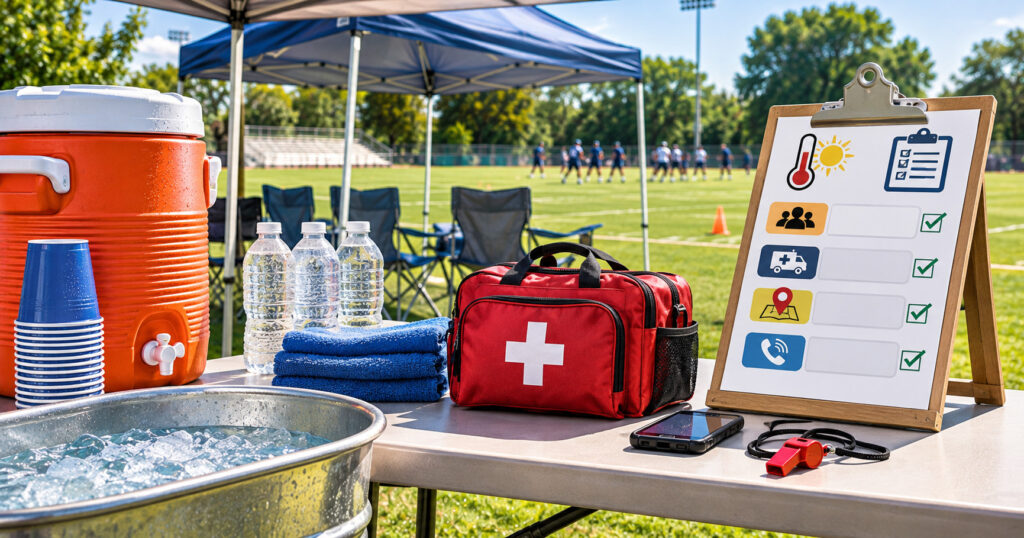
Heat emergency planning is a written, venue-specific emergency action plan that names who calls 911, who starts cooling, where the tub is, how the ambulance gets in, and what to do if more than one athlete goes down. Write it, post it, share it with EMS, and rehearse it. National Stay Cool Day’s free EAP Builder produces a finished plan in the school’s name.
This guide is for athletic directors, athletic trainers, coaches, principals and school safety leads who need to finish a heat emergency action plan and put it to use. It is for planning and education. It does not replace a team physician, medical director or school counsel.
What heat emergency planning covers
A generic emergency action plan is not enough if it only covers calling an ambulance. Heat emergency planning is a heat-specific plan for each field, gym, stadium or other venue. It already includes Cool First, Transport Second, a named person who cools, a cold-water immersion tub or a written backup, EMS access, and a plan for more than one athlete.
The National Federation of State High School Associations (NFHS) treats a written, posted, venue-specific emergency action plan as “a vital professional and legal responsibility of all schools.” It tells schools to train every member of the emergency team on their role, including “cooling techniques in situations involving heat stroke,” to review and rehearse the plan regularly, and to consider a short medical timeout before each contest. The National Athletic Trainers’ Association (NATA) says emergency action plans belong in organized sports at every level, and that emergency equipment, including a whole-body cold-water immersion vessel, should be available, accessible and identified.
Approximately 9,000 high-school athletes are treated for heat-related illnesses every year in the United States. At least 175 documented exertional heat stroke deaths have been recorded. Exertional heat stroke is 100% survivable when the athlete is cooled fast, on site. The written plan is how a school makes that possible at a real venue, on a real practice day.
What a school heat emergency action plan should include
The list below matches the sections in National Stay Cool Day’s free EAP Builder, so the guide and the tool stay aligned.
- School name on the finished document.
- Venues. A plan for each field, gym or other site, with the address, gate, GPS and an EMS liaison.
- Activities held at those venues.
- Named people and backups for each job, including who calls 911, who starts cooling and who meets the ambulance.
- Equipment and ice, including the cold-water immersion tub and where it sits.
- Heat-condition checks and the thresholds your medical team uses to change or stop activity. Follow your state association’s heat chart and rules, not a chart invented here. Our WBGT guide for schools and Heat Rules Card can help you organize those calls.
- Heat-stroke and cooling steps, written so staff can follow them under pressure.
- More than one athlete needing cooling at the same time.
- Communication, including how you reach EMS, families and administrators.
- Annual review and sign-off.
If you need a state-specific example, see the Alabama high school emergency action plan page. Check your own state association for the rules that apply to you. A broader staff checklist is in heat illness prevention for coaches and athletic staff.
Cool First, Transport Second belongs in the written plan
Call 911 right away, while cooling starts. Do not write a plan that only calls an ambulance and waits. An ambulance cannot give full-body immersion on the way to the hospital.
The written plan should say: start cooling on site, keep the athlete in ice water, and transport after cooling is underway, following Cool First, Transport Second. Start cooling within 10 minutes. Reach 102°F within 30. NFHS heat-illness guidance puts the emphasis on full-body cooling before transport and prefers ice-water baths when they are available. NATA’s 2015 exertional heat illnesses position statement says emergency supplies, including tubs for cold-water immersion, should be on site and ready.
Read Cool First, Transport Second, cold-water immersion for schools, why every event needs a tub and the cooling station checklist.
Plan for more than one athlete
A heat emergency can involve more than one athlete at the same time, especially at camps, two-a-days, or a meet or tournament with several teams on site. The plan should say where a second cooling option comes from, who leads if the athletic trainer is already occupied, and how you split roles when two athletes need help. The EAP Builder includes a section for this. The longer explanation is in why your emergency action plan must account for multiple athletes going down at once.
Rehearse the plan (heat stroke drill)
A plan on paper is not finished until people have walked it at the venue. NFHS says the plan should be reviewed and rehearsed regularly. Many programs drill before the season and again before the hottest stretch. New coaches and volunteers should see a drill before they work a hot practice.
A heat stroke drill times whether cooling can start within 10 minutes, whether the tub is actually ready, and whether the ambulance can get in. Our guide to running a heat stroke drill walks through the steps. National Stay Cool Day is Thursday, April 8, 2027, which is a useful rehearsal deadline for spring sports, not a substitute for a preseason drill.
Share the plan with EMS before the season
Give the finished, venue-specific plan to your local EMS agency before the season starts. Include the address, the gate or road to use, where the tub is, and that you will cool on site first. The medical timeout NFHS suggests before a contest is a short moment to confirm defibrillator locations, cooling assignments and who meets the ambulance. Do not wait until the day someone goes down to introduce yourselves.
Free tools that turn the plan into a finished document
The free Heat Emergency Action Plan Builder is the next step. It runs in the browser, puts the school’s name on a finished document and keeps what you type on the school’s device. Use this guide to understand the job, then use the builder to write the plan.
Related tools:
- Heat Rules Card for posting venue heat levels
- 14-day acclimatization schedule
- Heat Plan Check, a self-attested 2026–27 badge that means the check was completed, not that the school is certified
- School Heat Resources and free heat safety tools for schools
Schools and programs can take part in National Stay Cool Day at no cost ($0). Here’s how to join.
FAQ
What is heat emergency planning for a school?
Heat emergency planning is the work of writing, posting, sharing and rehearsing a heat-specific emergency action plan for each venue. The plan names who calls 911, who starts cooling, where the tub is, how the ambulance gets in, and what happens if more than one athlete goes down.
What should a school heat emergency action plan include?
It should include the school name; each venue’s address, gate, GPS and EMS liaison; activities; named people and backups; equipment and ice; heat-condition checks and medical-team thresholds; heat-stroke and cooling steps; a plan for more than one athlete; communication; and annual review and sign-off. Cool First, Transport Second belongs in the cooling steps.
Does every venue need its own heat EAP?
Yes. NFHS recommends a written, posted plan for every venue that hosts students, staff and spectators. A gym, a practice field and a stadium do not share the same gate, tub location or ambulance route, so each one needs its own page in the plan.
How often should a heat emergency plan be rehearsed?
NFHS says the plan should be reviewed and rehearsed regularly. It does not set a single required number of drills in the guidance cited here. Many programs rehearse before the season and again before the hottest stretch, and they run a drill with new staff before those people work a hot practice.
What if the school has no athletic trainer on site?
Name a medical lead and a backup in the written plan, and train them on their cooling role before the season. Call 911 right away, while cooling starts, and do not wait for medical staff to arrive. An athletic trainer is the best person to lead the response when one is present. The plan still has to work on days when one is not.
How do you plan for more than one athlete needing cooling at once?
Write down a second cooling option, who leads if the first medical lead is already occupied, and how you split 911, cooling and gate roles. Put that in the emergency action plan and rehearse it, not only a single-athlete scenario.
Should local EMS see the plan before the season?
Yes. Share the venue-specific plan, the gate or road, the tub location and the Cool First, Transport Second steps with local EMS before the season so the handoff is already agreed.
Where can a school get a free heat emergency action plan template?
National Stay Cool Day’s free EAP Builder produces a finished heat emergency action plan in the school’s name. NFHS also publishes sample EAP templates, which can be useful additional material. The National Stay Cool Day builder is the tool this guide points to.
Sources
- NFHS. “Emergency Action Plans, AEDs Essential for Upcoming Events in High School Sports, Performing Arts” (October 21, 2026). nfhs.org. Written venue plan, role training including cooling for heat stroke, regular rehearsal and a medical timeout.
- NFHS Sports Medicine Advisory Committee. Emergency Action Plan (EAP) for Interscholastic Activities Position Statement. NFHS PDF.
- NFHS sample EAP templates. nfhs.org/stories/sample-eap-templates.
- NFHS Sports Medicine Advisory Committee. Heat Acclimatization and Heat Illness Prevention Position Statement (April 2022). NFHS PDF.
- National Athletic Trainers’ Association. Position Statement: Emergency Action Plan Development and Implementation in Sport (2024). PMC11220767.
- National Athletic Trainers’ Association. Position Statement: Exertional Heat Illnesses (2015). NATA PDF. Open full text: PMC4639891.
- CDC MMWR. Heat Illness Among High School Athletes, United States, 2005-2009. MMWR. Source of the “approximately 9,000” time-loss heat-illness figure, which is not a deaths figure.
- CDC. Heat and Athletes. cdc.gov.
- Heat.gov (National Integrated Heat Health Information System). heat.gov.
- National Weather Service. Heat safety and heat forecast tools. weather.gov/safety/heat. Heat tools. Schools should follow their state association’s measure and chart.
- American College of Sports Medicine. Expert Consensus Statement on Exertional Heat Illness (2023). PubMed 37036463.
This article is for planning and education. It does not replace a team physician, medical director or school counsel. Review medical steps with your team physician or medical director. In an emergency, call 911.