
November 13, 2026
Gymnastics Heat Safety: Hot Gyms, Long Practices and Kids Who Keep Going
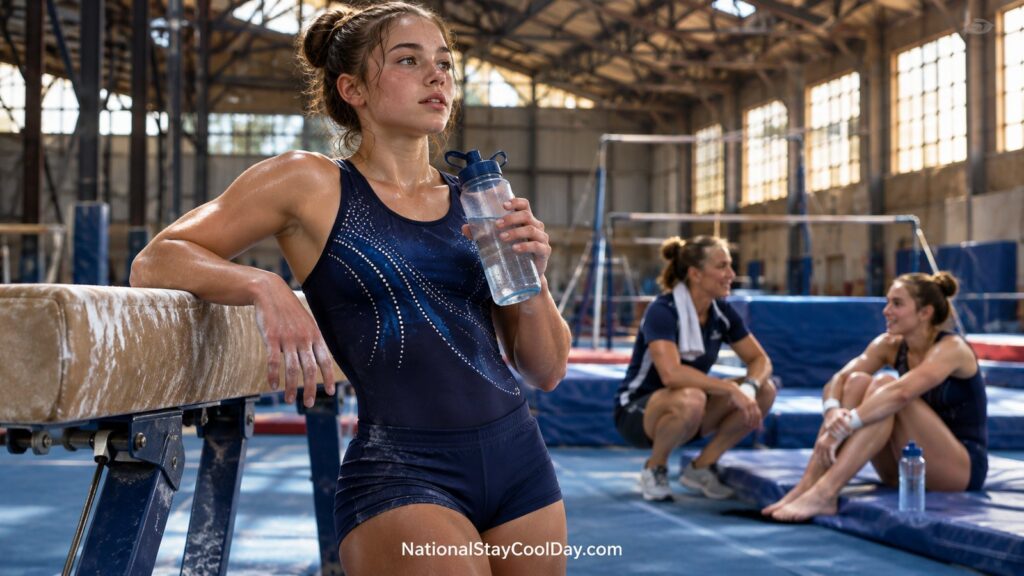
Gymnastics doesn’t look like a heat sport. There is no sun, no pads and no field. But a lot of gyms are big open buildings where the air gets hot and heavy by afternoon, especially in summer, when many programs run their longest training days and camps. Add a full floor of kids, mats and equipment that block airflow, and a gym can turn dangerous without anyone noticing.
Exertional heat stroke is 100% survivable when the athlete is cooled fast, on site. This guide is for gym owners, coaches and parents of young gymnasts, tumblers and trampoline athletes who want a heat plan in place before anyone needs it.
Why Heat Gets Missed in the Gym
- It’s indoors. People think of heat stroke as an outdoor problem. A gym feels safe even when the air inside is hot and humid. Read more in our guide to heat safety in indoor gyms.
- Long practices. Competitive gymnasts can train for hours at a time, several days a week, with conditioning at the end when they are already tired.
- Young athletes. Many gymnasts are young kids who may not know what they are feeling or how to say it.
- Kids who don’t want to stop. Gymnasts are taught to push through and finish the routine. Some won’t say they feel sick because they don’t want to lose their turn or let the coach down.
- Summer camps. Day camps fill the gym with more kids than usual, sometimes all day, sometimes with outdoor games on top.
- No medical staff. Many gyms are private clubs with no athletic trainer in the building. The coach on the floor is the first responder.
Before the Season
- Know your building. Find out which areas get hottest and when: the upper level, the tumble track, the back of the gym, the loft. Check them on a hot afternoon, not a cool morning.
- Take a heat reading inside the gym, not just outside. Our WBGT guide explains how to measure heat stress and what the numbers mean.
- Write down your heat rules. Decide ahead of time what conditions mean shorter practice, more breaks, moving conditioning to a cooler time or canceling. Then nobody has to make the call on the spot.
- Put a cold-water immersion tub in the building. Pick a spot near the floor with room around it, a hose or water source close by and a clear path to the door for emergency crews. Our cooling station checklist covers what to have ready.
- Build an emergency action plan for the gym. Name who calls 911, who starts cooling, who meets the ambulance at the door and where the tub is. Our free emergency action plan builder gives you a finished plan in your gym’s name.
- Ease into summer training. Athletes coming back from a break need time to get used to the heat. Read why the first two weeks matter.
On Training Days
- Check the heat inside before practice starts and again later in the day.
- Build in regular water breaks, and let athletes keep a water bottle near the floor.
- Open doors and run fans where it is safe to do so.
- Do hard conditioning early, or cut it back on hot days.
- Watch kids who are new, coming back from time off or recently sick.
- Tell athletes, out loud and often, that it is OK to stop and tell a coach if they feel dizzy, sick or wrong. Nobody gets in trouble for speaking up.
Parents can help at home. Share our parent prep guide so gymnasts show up rested, fed and drinking water.
Know the Signs
The sign that matters most is a change in how the brain is working. Watch for a gymnast who is confused, can’t remember a skill they know well, loses balance, stumbles, gives strange answers or seems “out of it.” Collapse or a seizure is an emergency. An athlete with heat stroke may still be sweating. If something seems off, treat it as heat stroke. Read exertional heat stroke symptoms every coach and parent should know.
In gymnastics, a fall or a missed skill can look like a simple mistake. If a gymnast who is usually steady starts falling, missing easy skills or acting confused on a hot day, stop and check on them.
When an Athlete Goes Down
- Call 911 and start cooling at the same time. One coach calls and gives the gym’s address and which door to use. Another gets the athlete to the tub.
- Cool first, transport second. Get the athlete into the cold-water immersion tub as fast as you can.
- Use ice agitation. Keep the ice and water moving around the athlete. Take off anything you can quickly, but don’t delay cooling because of gear removal.
- Move the other kids away and have another adult stay with them.
- Send someone to the door to meet the ambulance and lead the crew to the athlete.
- Call the athlete’s parents once cooling is going and help is on the way.
Cooling should start within 10 minutes. The goal is to bring body temperature down to about 102°F within 30 minutes, because at 104°F the body loses its ability to regulate its own temperature. Cold towels and ice packs are not enough. Read cool first, transport second and why cold towels don’t treat heat stroke.
Practice these steps with your coaching staff before summer starts. Our guide to running a heat stroke drill shows how. If your gym also has cheer or dance teams, see cheer and dance heat safety.
Bring Your Gym Into National Stay Cool Day
National Stay Cool Day is April 8, 2027. Gyms, clubs, schools and youth programs can take part. Here’s how schools and programs can sign up.