
October 28, 2026
Cheer and Dance Heat Safety: Sideline and Competition Risks Parents Overlook
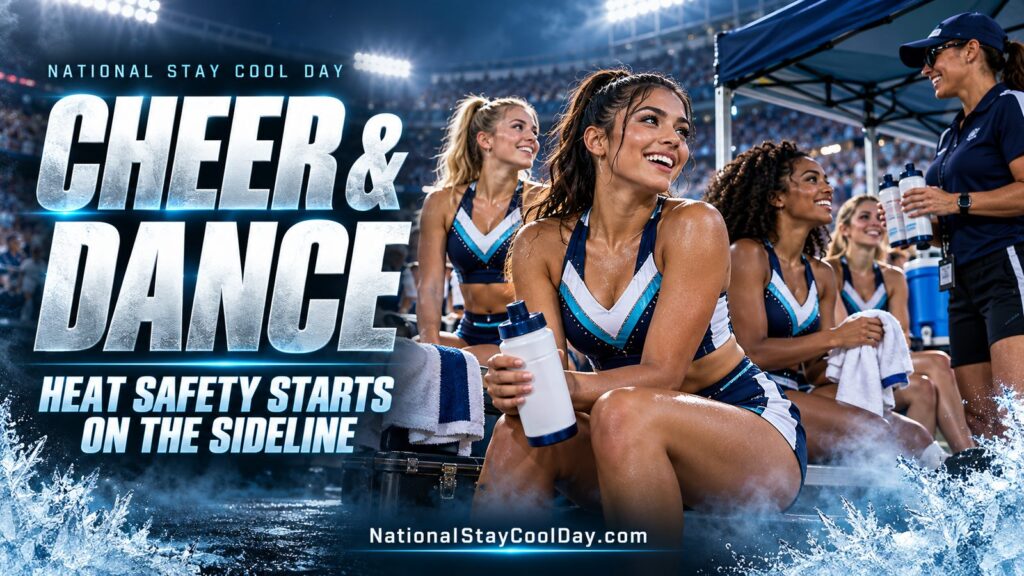
Cheerleaders and dance team members spend entire games on hot sidelines, tracks and turf. They stand in full uniform through warm-ups, four quarters and halftime, then perform high-intensity routines with little break in between. At outdoor competitions they wait for hours in the sun between warm-up and performance. Heat illness does not care whether an athlete carries a ball.
Cheer and dance are athletic activities, and the heat risks are real. This guide covers the risks parents and staff overlook and how to make sure these athletes are inside the heat plan, not outside it.
Why Cheer and Dance Get Missed
Heat plans are often written around the team on the field. The squad on the sideline works just as long in the same heat, and sometimes longer. Common gaps:
- No one is assigned to them. The athletic trainer watches the players. The cheer or dance coach is busy running the routine. Nobody owns the heat call for the sideline.
- Breaks follow the game, not the heat. Football players rest during timeouts and between series. Sideline squads often keep cheering through every stoppage.
- Their practices fall outside the plan. Summer camps, early morning practices and competition rehearsals happen on hot surfaces with no heat reading and no cooling tub nearby.
- The emergency plan leaves them out. If the plan only lists the stadium field, staff at the practice lot or competition site do not know where to go or what to do.
The Heat Risks Specific to Cheer and Dance
Long periods of standing
The National Athletic Trainers’ Association (NATA) describes heat syncope, or fainting and dizziness in the heat, as something that often happens to people who stand for long periods in the heat, especially in a uniform or insulated clothing. It happens most in the first days of heat exposure, before the body has adjusted. Standing on a sideline for a full game is exactly that setting.
Uniforms and warm-ups
NATA states that excessive clothing reduces the body’s ability to control its temperature and increases how much heat the body absorbs from the sun. Long sleeves, warm-up jackets, heavy fabrics and dark colors all add heat. Shorter sleeves, lighter fabrics and taking warm-ups off as soon as the routine allows all help.
Sun, turf and track
Sidelines are rarely shaded. The National Weather Service notes that full sunshine raises the heat index by up to 15°F above the shaded value. Turf and track surfaces add heat from below. A squad standing in direct sun on a track feels far more heat than the forecast suggests.
Bursts of intense work
Stunts, tumbling and dance routines are short, hard bursts of effort. Repeated all game long with little rest, they build body heat on top of the heat from the sun.
Limited water
Squads often keep water bottles away from the performance area or wait for halftime to drink. NATA calls for free access to fluids at all times and for rest breaks that give every athlete enough time to drink.
Long competition days
Outdoor competitions mean early arrival, long waits in warm-up areas and back-to-back routines. The effects of heat build through the day and carry into the next. NATA states that high heat stress (WBGT) on the previous day is one of the best predictors of heat illness the following day.
Who Owns the Heat Plan for Cheer and Dance
The answer is the same people who own it for every other team. NATA calls for coaches, administrators, security staff, EMS and athletes to be educated on recognizing heat illness, and for every institution to have and practice an emergency action plan specific to each practice and game site. That includes the sideline, the practice lot and the gym.
Make it specific:
- Name cheer and dance in the emergency action plan, with every practice location listed. Build it with the free Emergency Action Plan Builder.
- Put a Heat Rules Card where cheer and dance practice, not only at the football field, and follow the same heat levels and break rules.
- Assign one adult on the sideline to watch the squad for heat illness during every game, separate from the person running the routines.
- Include cheer and dance in acclimatization. NATA describes heat acclimatization as the body adapting to repeated exercise in the heat over 10 to 14 days. Squads that start summer practice need the same gradual build as every other team.
- Give them access to the cooling tub. The tub at the game field serves everyone on that field, including the sideline.
A Game-Night Plan for the Sideline
- Check the heat reading before the game and set breaks to match it.
- Set up shade near the squad, using a canopy if the stadium has none.
- Keep water and sports drinks within reach and build drink breaks into the game script.
- Rotate athletes off the line so nobody stands in the sun for the whole game.
- Take warm-ups off as soon as the routine allows.
- Know where the cooling tub is and who responds if an athlete goes down.
Know the Signs
Watch for dizziness, fainting, headache, nausea, heavy fatigue, cramps and an athlete who stops performing. A cheerleader who feels faint in the heat goes to the shade, lies down with legs raised, cools off and drinks. NATA lists those steps for heat syncope.
Watch closely for any change in behavior. Confusion, stumbling, odd behavior, irritability or collapse is heat stroke until proven otherwise, even if the athlete is still sweating. Fainting that comes with confusion is not simple fainting.
If It Is Heat Stroke
- Call 911 and start cooling at the same time.
- Put the athlete in a tub of ice water, covering as much of the body as possible, with the head supported above the water.
- Remove anything you can quickly but don’t delay cooling because of gear removal.
- Keep up ice agitation the whole time.
- Start cooling within 10 minutes and cool to about 102°F within 30 minutes, then transport.
Cold towels and ice packs are not enough. Read why cold towels, ice packs and fans don’t treat heat stroke.
Questions for Parents to Ask
- Is the cheer or dance squad named in the school’s emergency action plan?
- Who watches the squad for heat illness during games?
- Is there shade and water on the sideline?
- Is a cooling tub set up at practices and games, and does the coach know where it is?
- Do outdoor competitions have a medical plan and a cooling tub?
For the full list, read questions every parent should ask about heat safety.
Frequently Asked Questions
Are cheerleaders and dancers at risk for heat stroke?
Yes. Heat stroke comes from hard exercise in the heat. Long hours in uniform, in the sun, with short intense routines and few breaks put cheer and dance athletes at real risk.
Is fainting on the sideline just heat syncope?
Simple fainting in the heat clears quickly once the athlete lies down in the shade. An athlete who is confused, acting oddly or slow to recover is treated as heat stroke.
Do heat rules apply to cheer and dance practice?
Yes. Use the same heat readings, break rules and activity limits as every other outdoor team.
Should squads wear warm-ups on hot nights?
Only as long as the routine requires. Extra layers trap heat. Take them off at the first opportunity.
National Stay Cool Day Is April 8, 2027
National Stay Cool Day is a free national day for schools and programs to put heat plans in place before the season. Sign your school or program up.
References
- National Athletic Trainers’ Association. Position Statement: Exertional Heat Illnesses. Journal of Athletic Training. 2015;50(9):986-1000. See recommendations 4, 5, 12 and 31 and the sections on heat syncope, excessive clothing and previous-day WBGT. pmc.ncbi.nlm.nih.gov/articles/PMC4639891
- National Weather Service. What is the heat index? weather.gov/safety/heat-index
This article is for education and planning. It does not replace medical advice. Review all medical steps with your team physician or medical director. In an emergency, call 911.