November 12, 2026
Fun Runs and Charity 5Ks: Heat Safety When Kids Run With the Crowd
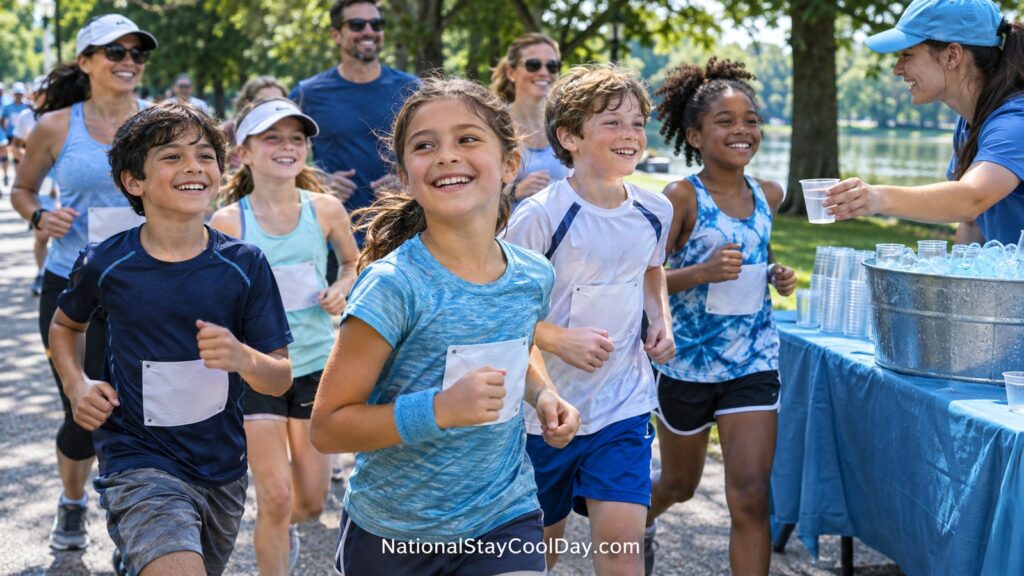
School fun runs, charity 5Ks and color runs bring out kids who don’t train for running at all. A second grader lines up next to a parent, a middle schooler sprints the first half mile with friends, and a crowd of hundreds spreads out over a course that may run past parking lots, neighborhoods and open fields. Many of these events happen on spring or summer mornings, and the finish line party can last well past the cool part of the day.
Exertional heat stroke is 100% survivable when the runner is cooled fast, on site. This guide is for race organizers, school and parent groups, and families who want a plan ready before a young runner gets into trouble.
Why Fun Runs Carry Extra Risk
- Many runners are not trained. Kids who play other sports, or no sport, may run farther and harder than they ever have.
- Excitement pushes the pace. Kids race their friends, chase a medal or try to keep up with an adult, and they don’t slow down when they should.
- The course spreads out. A runner in trouble may be far from the start and finish, out of sight of the race staff.
- Costumes and extras hold heat. Capes, costumes, team shirts over shirts and color powder all add up on a hot morning.
- Crowds slow help down. Road closures, parked cars and a packed finish area can make it hard for an ambulance to reach a runner.
Plan Before Race Day
- Write a heat plan into your emergency action plan. Our free emergency action plan builder gives you a finished plan in your program’s name.
- Pick a start time early in the morning, and check heat conditions on the course, not just the forecast. Our WBGT guide explains how.
- Decide ahead of time what conditions mean you shorten the course, turn the run into a walk or call it off. Write it down so the call is easy on the day.
- Map the course with the cooling spot marked, plus a clear path for an ambulance at the finish and at the far end of the course. Know the street names you will give 911.
- Offer a shorter kids’ distance, and tell families it is fine to walk. Share our parent prep guide so kids show up rested, fed and drinking water.
On Race Day
- Have a cold-water immersion tub filled and ready near the finish line before the first runner starts. Use our cooling station checklist.
- Put water on the course, not only at the finish. Kids running a mile or more need a stop along the way.
- Station adults along the course with a phone and a way to reach the race lead. Every part of the course should have someone watching it.
- Keep the finish area moving. Walk runners through to shade and water instead of letting them stop and crowd the line.
- Send a last adult behind the slowest runner, so no child is alone at the back of the course.
- Tell kids it is OK to stop. Say it at the start line: if you feel confused, dizzy or wrong, stop and tell an adult. Walking to the finish still counts.
Know the Signs
Heat stroke can look like a kid who is just tired at the end of a race. Watch for a runner who is confused, stumbles or weaves, gives strange answers, or seems “out of it.” A runner may still be sweating. Collapse or a seizure is an emergency. When in doubt, treat it as heat stroke. Read exertional heat stroke symptoms every coach and parent should know.
Friends running together often notice first. Share our guide on looking out for teammates with your school or group.
When a Runner Goes Down
- Call 911 and start cooling at the same time. One person calls and gives the street name or closest landmark. Another gets the runner to the tub.
- Cool first, transport second. Get the runner into the cold-water immersion tub as fast as you can.
- Use ice agitation. Keep the ice and water moving around the runner. Take off anything you can quickly, but don’t delay cooling because of gear removal.
- Clear a path through the crowd and send someone to meet the ambulance at the nearest open road.
- Find the runner’s family with the help of the registration table, so a parent can be with them.
Cooling should start within 10 minutes. The goal is to bring body temperature down to about 102°F within 30 minutes, because at 104°F the body loses its ability to regulate its own temperature. Cold towels and ice packs are not enough. Read cool first, transport second and why cold towels don’t treat heat stroke.
MISSING: heat rules or permit requirements for community road races and school fun runs were not verified here. Check with your city, school district and any race organization you work with before you set a date.
Before race day, walk your volunteers through these steps at the finish line. Our guide to running a heat stroke drill shows how. For runners who train for longer races, see cross country heat safety, and for school events, see field day heat safety.
Bring Your School or Group Into National Stay Cool Day
National Stay Cool Day is April 8, 2027. Schools, clubs and youth programs can take part. Here’s how schools and programs can sign up.