
November 2, 2026
Football Preseason Heat Safety: Pads, Practice and the First Two Weeks
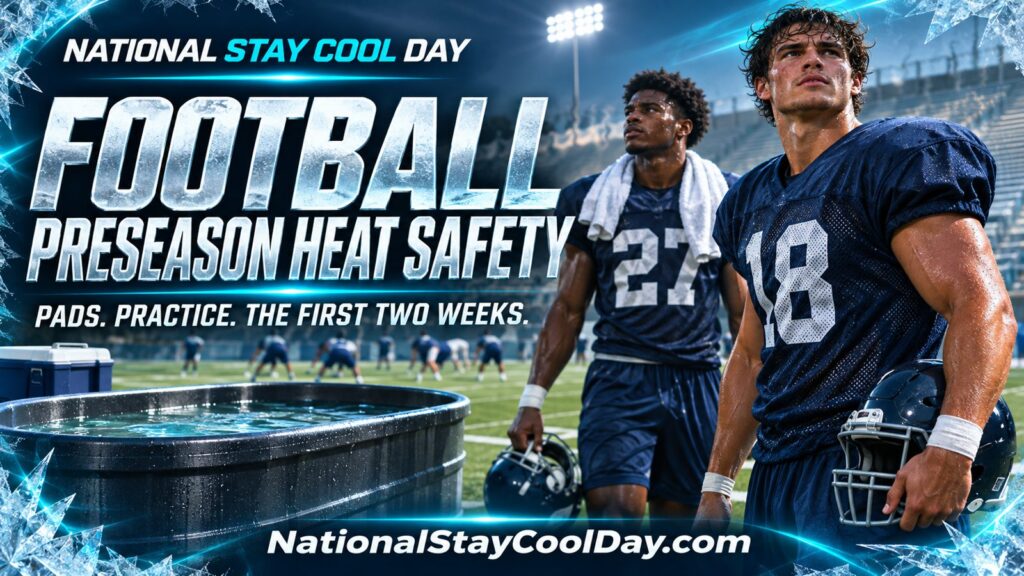
Football has more heat risk packed into a few weeks than almost any other sport. Preseason starts in the hottest part of summer, players wear helmets and pads that hold heat in, and many are working out hard for the first time in months. Big linemen, conditioning drills and long practices all add to it.
Exertional heat stroke is 100% survivable when the athlete is cooled fast, on site. In football, that means the plan, the tub and the people are in place before the first preseason practice, not after someone goes down.
Why Football Preseason Is Different
- The calendar. Practice often starts in late July or August, when heat and humidity are at their worst.
- The gear. Helmets and pads trap heat and make it harder for the body to cool itself through sweat.
- Bodies not ready yet. Players coming off summer break haven’t adjusted to working hard in the heat. The first days are the riskiest.
- Conditioning drills. Sprints, gassers and “punishment” running push players at the exact moment heat is building.
- Bigger athletes. Linemen carry more body mass and often work hardest in the trenches, so they can heat up faster.
Before the First Practice
- Build up slowly. Start with shorter practices and lighter gear, then add pads and time over the first weeks. Read why the first two weeks matter.
- Follow your state association’s preseason rules on practice length, gear and two-a-days. Rules differ by state, so check yours.
- Write an emergency action plan for every field you use, including the practice field and away stadiums. Our free emergency action plan builder walks you through it.
- Decide who makes heat calls, who calls 911 and who runs the cooling tub. Write the names down.
- Run a drill. Practice getting a player from the field into the tub before you ever need to do it for real.
Before Every Hot Practice
- Check the conditions. Heat and humidity together matter more than the temperature alone. Our WBGT guide explains how to measure it, and our post on humidity and practice explains why a muggy morning can be worse than a hot afternoon.
- Fill a cold-water immersion tub with ice and set it up next to the practice field, in the shade if you can. Our cooling station checklist covers what to have ready.
- Have water and shade available, and make breaks part of the practice plan, not something players have to ask for.
- Know the field address and the gate an ambulance would use.
- Ask players if anyone has been sick, is taking new medicine, slept badly, or hasn’t eaten or had much to drink today.
During Practice
- Give regular breaks in the shade. Let players take helmets off during breaks.
- Save the hardest conditioning for cooler parts of the day, or cut it when conditions are bad.
- Never use running or extra conditioning as punishment in the heat.
- Assign one adult to watch players, not drills. Linemen and players who are new, out of shape or just back from being sick need extra attention.
- Make it normal for a player to say “I don’t feel right” or speak up about a teammate. Read our guide for athletes on looking out for teammates.
Signs to Watch For
The sign that matters most is a change in how the brain is working. Act right away if a player:
- seems confused, gives strange answers or forgets plays they know
- stumbles, loses balance or can’t keep up
- acts out of character, gets irritable or seems “out of it”
- collapses or has a seizure
They may still be sweating. Sweat does not rule out heat stroke. For the full list, read exertional heat stroke symptoms every coach and parent should know.
If a Player Goes Down
- Stop the drill and get to the player.
- Call 911 and start cooling at the same time. One person calls. Another starts cooling.
- Cool first, transport second. Cooling should start within 10 minutes. The goal is to bring body temperature down to about 102°F within 30 minutes.
- Use cold-water immersion with ice agitation. Get the player into the tub and keep the ice and water moving around them.
- Remove anything you can quickly but don’t delay cooling because of gear removal.
- Send someone to meet the ambulance at the gate and lead the crew straight to the player.
Why the rush: at 104°F, the body loses its ability to regulate its own temperature. Cold towels and ice packs are not enough. Read why cold towels don’t treat heat stroke and cool first, transport second.
For Parents
Before preseason starts, ask the coach where the cooling tub is, who calls 911 and how the team builds up to full pads. Our list of heat safety questions parents should ask is a good place to start. At home, our parent’s prep guide covers sleep, food and drinks before hot practices.
Quick answers
Why is football preseason a high-risk time for heat stroke?
Practice often starts in late July or August, helmets and pads trap heat, players haven't adjusted to working hard in the heat, and conditioning drills push them as heat builds. The first days are the riskiest.
What are the warning signs of heat stroke in a football player?
A change in how the brain is working: confusion, strange answers, stumbling or losing balance, acting out of character, collapse or a seizure. They may still be sweating. Sweat does not rule out heat stroke.
What should coaches do if a player goes down in the heat?
Call 911 and start cooling at the same time. Cool first, transport second: start cooling within 10 minutes and aim for about 102°F within 30 minutes, using cold-water immersion with ice agitation. Remove anything you can quickly but don't delay cooling because of gear removal.
Is exertional heat stroke survivable?
Yes. Exertional heat stroke is 100% survivable when you cool first, on site, with the plan, the tub and the people in place before the first preseason practice.
Bring Your Team Into National Stay Cool Day
National Stay Cool Day is April 8, 2027. Football programs, schools and leagues can all take part. Here’s how schools and programs can sign up.