November 21, 2026
Calling 911 for Heat Stroke: What to Say and How to Get Help to the Field Fast
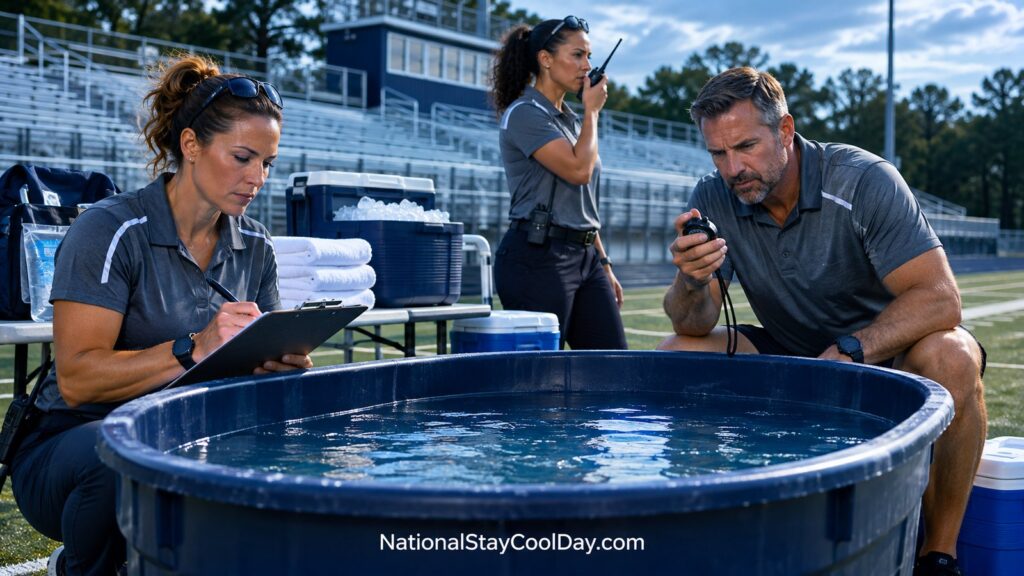
When an athlete goes down in the heat, two jobs have to happen at once. Someone starts cooling, and someone calls 911. This guide is about the second one: the phone call, the minutes after it, and getting the ambulance crew to the right spot on a big campus.
The caller is often an assistant coach or a parent who has never called 911 for anyone. A few lines written down ahead of time make the call faster and calmer.
Decide Who Calls Before the Season
In a real emergency, two people may both grab a phone while nobody brings the ice, or everyone assumes someone else already called.
- Name a caller and a backup. Do it for every practice and game. The caller should not be the person running the cooling. Our free emergency action plan builder puts these names in writing.
- Check the phone and the signal. The caller needs a charged phone that works at that field. If a practice site has weak service, find the nearest spot where calls go through and write it in the plan, or set up a radio to someone who can call.
- Train everyone who might be first on the scene. Student managers, volunteers and new staff should know how to make the call too.
Write the Location Down Now
“The high school” is not an address. Big campuses have several entrances, and a practice field can sit far from the main building. For every field, gym and practice site, write down:
- The street address, and the name of the field or gym as it appears on the signs.
- The entrance an ambulance should use, such as the gate nearest the practice field or the service drive behind the gym.
- Who has the key to any gate that might be locked, including on weekends and in the summer.
- A landmark the crew can spot from the road, like the press box or scoreboard.
Our free Heat Rules Card has an emergency box for the street address for 911 callers, the ambulance entrance or gate and the cooling tub location, and you make one card for each venue. Post it, keep a copy in the medical kit and save the address in the caller’s phone.
Don’t Wait to Call
Heat stroke affects the brain, so the most important sign is a change in how an athlete thinks or acts in the heat. Call if an athlete collapses, seems confused, can’t answer simple questions, stumbles, acts unlike themselves or becomes hard to wake. An athlete who is still sweating can still be in heat stroke. When in doubt, treat it as heat stroke and make the call. See our guide to exertional heat stroke symptoms.
What to Say on the Call
The dispatcher will ask questions and guide the call. Stay calm, answer clearly and stay on the line until they tell you it’s okay to hang up. Have these points ready:
- Where you are. The street address, the field or gym, and the entrance where someone will meet the ambulance.
- What happened. For example: “A student athlete collapsed at practice in the heat. We think it is exertional heat stroke.”
- What you see. Whether the athlete is awake, confused or not responding, and whether they are breathing.
- What you are doing. “We are cooling the athlete on site in a cold-water immersion tub.” That tells the crew what to expect.
- How many. If more than one athlete is sick, say so right away. Our guide on more than one athlete going down at once explains why that matters.
Write a short version of this script on the card. Under stress, reading is easier than remembering.
Keep Cooling While the Call Happens
Exertional heat stroke is 100% survivable when the athlete is cooled fast, on site. The phone call never pauses the cooling. Everyone on staff should know these steps:
- Call 911 and start cooling at the same time. The caller calls. Everyone else gets the athlete to the tub.
- Cool first, transport second. The athlete goes into a cold-water immersion tub with ice agitation, which means keeping the ice and water moving around them. Keep the athlete’s head above the water. Take off whatever gear comes off quickly, but never delay cooling for gear removal.
Cooling should start within 10 minutes. The goal is to bring body temperature down to about 102°F within 30 minutes, because at 104°F the body loses its ability to regulate its own temperature. Cold towels, ice packs and fans do not treat heat stroke. Read more on why cold towels don’t treat heat stroke and cool first, transport second.
Meet the Ambulance
- Send one person to the entrance you named on the call. They wave the crew in and lead them straight to the athlete.
- Clear the way. Open gates, move anything parked in the drive and turn on the field lights if it is getting dark.
- Write down the times. Note when the athlete went down, when 911 was called and when cooling started, and hand that to the crew.
- Take care of everyone else. Another adult moves the rest of the team to shade and water and checks on them.
Talk to Your Local EMS Before the Season
The best time to explain your plan to the ambulance crew is before anyone is sick. Share your written plan with your local EMS agency, give them the addresses and entrances for your fields and tell them your program cools first and transports second. Our guide to heat emergency planning covers how to write, post and rehearse that plan, and our cooling station checklist lists what to set up.
Practice the Call
A drill is where you find out the gate is locked or the address on the card is wrong. In our heat stroke drill guide, the caller says out loud what they would tell the dispatcher, including the field address and gate. Tell your local EMS you are practicing, and do not actually dial 911.
Questions for Your Team
- Who is the caller at today’s practice, and who is the backup?
- Could a new assistant or a parent volunteer give the address and the right entrance without asking anyone?
- Who has the gate key on a Saturday in July?
National Stay Cool Day on April 8, 2027 is a good day to run the drill with your whole staff. See what the day looks like on our National Stay Cool Day 2027 page.
Take the next step: build your heat emergency action plan with our free heat safety tools, then sign up your school for National Stay Cool Day on April 8, 2027. Both are free.