November 20, 2026
Music Students and Heat: Summer Camps, Outdoor Concerts and Pep Band in the Stands
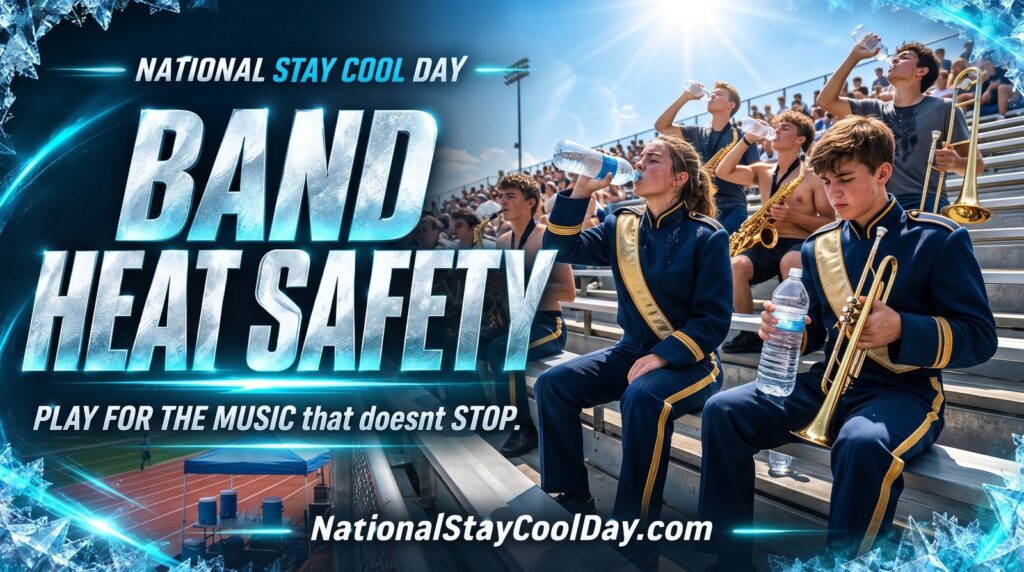
Choir, orchestra, jazz band and concert band don’t look like sports. Nobody wears pads, and most of the work happens sitting or standing in one place. But music students spend a lot of time in the heat. Summer music camps run during the hottest weeks of the year. Pep bands sit in packed, sunny bleachers for whole football games. Outdoor concerts, festivals and graduation ceremonies put singers and players in formal clothes under the afternoon sun. And somebody has to carry the timpani, the risers and the sound gear from the truck to the stage.
Marching band gets most of the attention when people talk about heat and music, and our marching band heat guide covers rehearsal on the field. This guide is for the rest of the music program: directors, section leaders, camp staff, boosters and parents who want a heat plan for the days that don’t happen on a practice field.
Where the Heat Builds in a Music Program
Summer music camps
Many middle and high school students spend part of the summer at music camps on school or college campuses. The days are long. Students walk between buildings in the sun, play or sing for hours, and may rehearse in rooms where the air is turned down or off for the summer. Students who just arrived from a cooler place, or who have spent the summer indoors, are not used to the heat yet.
Pep band in the stands
A pep band often sits in the same spot for an entire game, in uniform, in direct sun, packed shoulder to shoulder. Players blow hard and stand to play over and over.
Outdoor concerts, festivals and ceremonies
Spring concerts in the park, summer festival stages, community events and graduation ceremonies often happen outside in the warm months. Formal concert clothing is usually dark and covers most of the body.
Loading in and loading out
Moving instruments, cases, stands, risers and sound equipment is hard physical work. It often happens on a loading dock, in a parking lot or across a hot field, and it usually happens before and after the performance, when students are already tired.
Know the Signs
Heat stroke affects the brain, so the clearest warning is a change in how someone thinks or acts in the heat. Watch for a student who is confused, stumbling, acting strange, slurring words, losing their place in music they know well, not answering questions clearly or collapsing. A student who is still sweating can still be in heat stroke.
Musicians are trained to keep going until the piece is over. Nobody wants to stop a rehearsal or walk off a stage. Tell your students plainly that speaking up for themselves or for a friend is always the right call, even in the middle of a performance. Our guide to exertional heat stroke symptoms covers the signs in more detail, and looking out for your teammates works just as well for a section.
Build Prevention Into the Schedule
- Ease in at camp. Start the first days of camp with shorter blocks and more breaks, then build up. Our guide to heat acclimatization explains why the first two weeks matter.
- Put breaks on the schedule. Write water breaks into the rehearsal plan, in shade or the coolest room you have, and keep them even when the rehearsal is running behind.
- Bring water to the section. At games and outdoor events, keep water with the band instead of making students leave to find it.
- Look for shade first. When you scout an outdoor venue, ask where the group will wait, warm up and perform, and whether any of those spots are in shade.
- Dress for the weather when you can. If the event allows it, choose lighter summer concert clothes, and let students wait in light clothes and change close to performance time.
- Share the heavy lifting. Move gear early in the day or after the sun goes down when possible, use carts, and rotate who carries.
Have a Plan Before Someone Goes Down
Exertional heat stroke is 100% survivable when the person is cooled fast, on site. That only happens when the plan is in place before the first rehearsal or the first outdoor gig. Every music program that works in the heat should know these steps:
- Stop and get help. Stop the rehearsal or the piece, and get the director or the nearest adult. Don’t leave the student alone.
- Call 911 and start cooling at the same time. One person calls and gives the exact address and the entrance an ambulance should use, such as the stadium gate or the stage door.
- Cool first, transport second. The student goes into a cold-water immersion tub with ice agitation, which means keeping the ice and water moving around them. Take off extra gear and clothing if you can do it quickly, but don’t delay cooling because of gear removal.
- Meet the ambulance. Someone waits at the right entrance and leads the crew straight to the student.
Cooling should start within 10 minutes. The goal is to bring body temperature down to about 102°F within 30 minutes, because at 104°F the body loses its ability to regulate its own temperature. Water, shade and fans help prevent heat illness, but they do not treat heat stroke, and neither do cold towels or ice packs. Read more on why cold towels don’t treat heat stroke and cool first, transport second.
Questions for Your Program
- At a home football game, where is the nearest cooling tub and ice, and how fast can it reach the pep band section?
- Does your school’s athletic trainer know when and where the music program rehearses in the summer?
- For each outdoor concert or festival, who knows the street address, the closest entrance for an ambulance and the plan for cooling on site?
Walk through the plan with staff and student leaders before camp starts or the first outdoor performance. Our guide to running a heat stroke drill shows how to practice it, and our theatre and indoor gym heat guides carry over well to music. Band members can find more on our page for band members. National Stay Cool Day on April 8, 2027 is a good day to bring your music students into the same Cool First training as your athletes. See what the day looks like for middle and high schools.
Take the next step: build your heat emergency action plan with our free heat safety tools, then sign up your school for National Stay Cool Day on April 8, 2027. Both are free.