
November 9, 2026
Field Day Heat Safety: A Plan for Elementary Schools
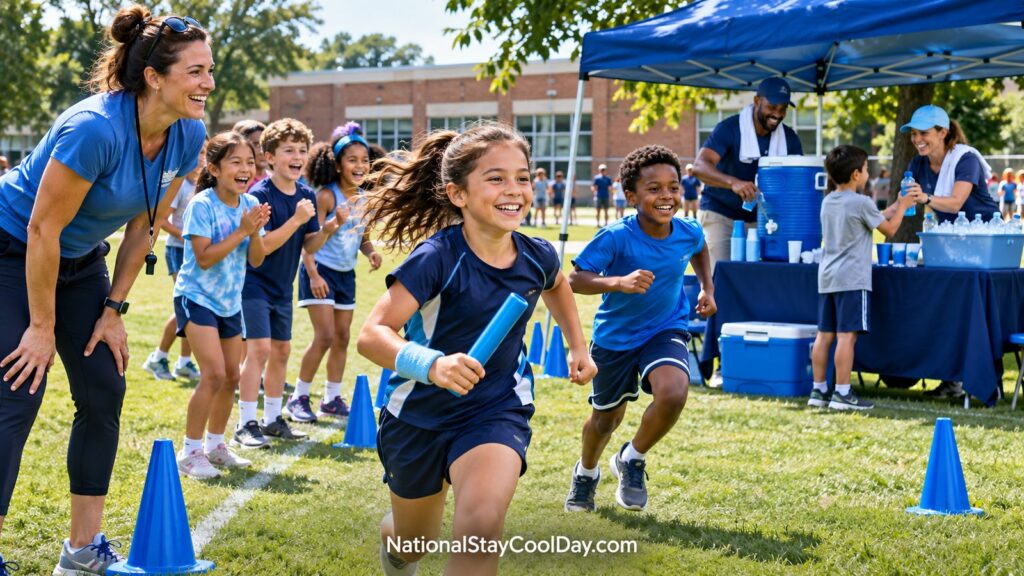
Field day is one of the best days of the school year. It is also a long, hot afternoon outside for hundreds of young kids who will run until someone tells them to stop. Younger children don’t always notice when they are getting too hot, and they don’t always say so.
Exertional heat stroke is 100% survivable when the child is cooled fast, on site. A field day plan takes an hour to put together, and it means every adult on the field knows what to do if a child goes down.
Why Field Day Needs a Heat Plan
- Kids play hard and don’t pace themselves. Relay races, tug of war and running games go back to back, often with little shade between stations.
- Young children may not speak up. A kid who feels sick may think they are in trouble, or may not have the words for what is wrong.
- Lots of volunteers, few trained staff. Parent volunteers run many stations. They may not know the school’s emergency plan or where the nurse is.
- It often lands in late spring. The first warm days of the year catch kids who have spent months indoors. Read spring heat safety for more on early-season heat.
- Recess and PE add up. A class may have outdoor PE in the morning, recess at lunch and field day in the afternoon. Count the whole day, not just one event.
Before Field Day
- Build or update your emergency action plan for the field. Our free emergency action plan builder gives you a finished plan in your school’s name, and the data stays on your device. It includes a section for more than one child going down at once, which matters on a day with this many kids outside.
- Put names next to jobs: who calls 911, who starts cooling, who meets the ambulance, and who stays with the rest of the class.
- Set up a cold-water immersion tub with ice near the main field before the first event, not in the nurse’s office. Our cooling station checklist lists what to have ready.
- Give every station volunteer a short card with three things: the signs of heat stroke, who to radio or call, and where the tub is.
- Know the address and the gate an ambulance would use, and make sure it is open.
- Plan a rain-or-heat backup: a cooler time of day, a shorter schedule or indoor stations.
- Check your district’s rules for outdoor activity in heat. MISSING: district and state heat rules for elementary outdoor activity vary and were not verified here; follow your district.
Running a Cooler Field Day
- Check heat and humidity the morning of and again before the afternoon events. Our WBGT guide explains how, and humidity and heat explains why a muggy day can be worse than it looks.
- Put water at every station, not just one table across the field.
- Build shade and water breaks into the rotation for every class, so no one has to ask.
- Save the hardest running events for the coolest part of the day.
- Tell kids at the start: if you feel dizzy, sick or strange, tell a grown-up right away. You will not be in trouble. If a friend looks wrong, tell a grown-up too.
- Keep groups small enough that each adult can see every child at their station.
- Ask teachers to note any child who skipped breakfast, has been sick or seems tired that morning.
Signs to Watch For in Young Kids
The most important sign is a change in how the child is thinking or acting. Act right away if a child:
- seems confused, can’t answer simple questions or doesn’t know where they are
- stumbles, falls or can’t keep up when they could a few minutes ago
- suddenly goes quiet, gets cranky or acts unlike themselves
- says they feel sick, throws up or has a headache that won’t go away
- collapses or has a seizure
They may still be sweating. Sweat does not rule out heat stroke. When in doubt, treat it as heat stroke. For the full list, read exertional heat stroke symptoms every coach and parent should know.
If a Child Goes Down
- Stop the activity and get to the child.
- Call 911 and start cooling at the same time. One adult calls. Another starts cooling.
- Cool first, transport second. Cooling should start within 10 minutes. The goal is to bring body temperature down to about 102°F within 30 minutes.
- Use cold-water immersion with ice agitation. Get the child into the tub, keep their head above water, and keep the ice and water moving around them. See cold-water immersion for schools.
- Remove anything you can quickly but don’t delay cooling because of gear removal.
- Send someone to meet the ambulance at the gate and lead the crew straight to the child.
- Move the rest of the class to shade and water with another adult, and check on them too.
- Call the family once cooling has started and 911 is on the way.
Why the rush: at 104°F, the body loses its ability to regulate its own temperature. Cold towels and ice packs are not enough. Read why cold towels don’t treat heat stroke and cool first, transport second.
Teach It Before the Day
Field day week is a good time to teach kids the words “cool first, transport second.” Our lesson on teaching kids cool first, transport second like stop, drop and roll makes it simple, and our coloring pages work well in the classroom the day before.
Parents can help at home too. Share our parent home prep guide in the field day note that goes home.
Bring Your School Into National Stay Cool Day
National Stay Cool Day is April 8, 2027. Elementary schools can take part alongside middle schools, high schools and youth programs. Here’s how schools and programs can sign up.