
November 21, 2026
Softball Heat Safety: Catchers, Doubleheaders and Long Days in the Sun
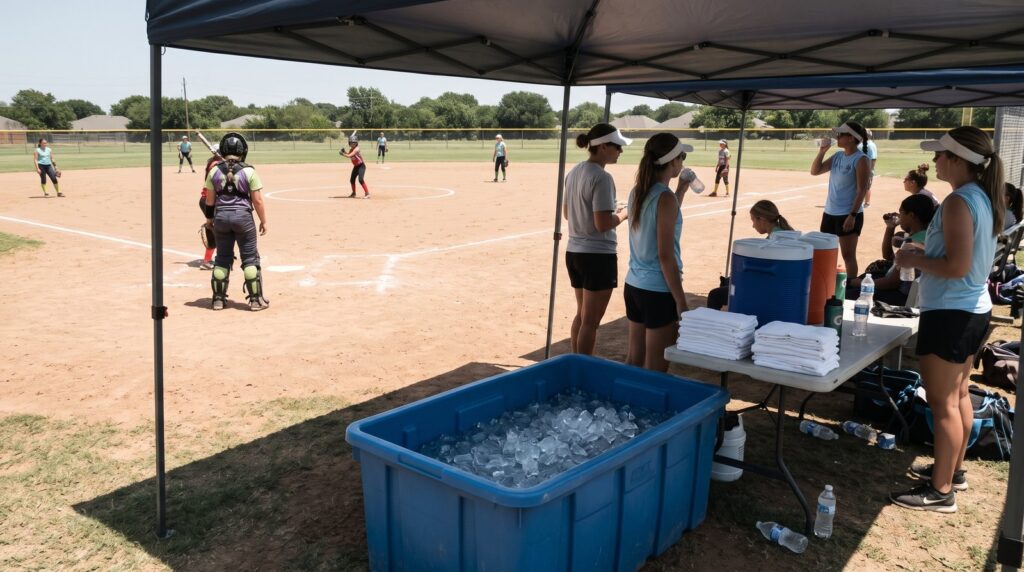
Softball does not look like a high-heat sport. Players stand between pitches, innings end fast, and a lot of the day is waiting. But summer and spring ball keep teams outside for hours: doubleheaders, weekend tournaments, afternoon starts, dugouts with little shade, and catchers in gear inning after inning.
Exertional heat stroke is 100% survivable when the athlete is cooled fast, on site. For softball, that means planning the whole day at the field, watching the players who work hardest in the gear, and having cooling ready before the first pitch.
Why Softball Heat Is Different
- Catcher’s gear. Helmet, mask, chest protector and shin guards hold heat in while the catcher squats and throws on every pitch.
- Doubleheaders and tournaments. Risk builds over a long day in the sun, not one inning. Players can still be at the field when the heat peaks.
- Little shade. Many fields have open dugouts, hot benches and no canopy. Between games, kids often sit in the sun.
- Long sit times. Standing and waiting feel easy, so a player quietly overheating in the outfield or on the bench is easy to miss.
Watch the Catcher and the Pitcher
The catcher and pitcher carry more heat work than anyone else. The catcher is in gear for every pitch. The pitcher works on every play. Both need extra eyes on hot days.
- Let the catcher take off the mask and helmet between innings and get shade and water first when the team comes off the field.
- On hot days and doubleheaders, share catching so one player is not behind the plate every inning.
- Have someone else warm up the pitcher between innings so the catcher gets a break.
- Watch the pitcher for changes in balance, speech or focus, especially late in a game or in game two of a doubleheader.
- Make it normal for a teammate to say someone looks off. See our guide on looking out for teammates.
Before the Season and Before a Doubleheader Day
- Ease into hard workouts and long outdoor days. Bodies that have not practiced in the heat yet are at higher risk. Read why the first two weeks matter.
- Write an emergency action plan for every field you use, including practice and tournament sites. Our free emergency action plan builder walks you through it.
- Decide who calls 911, who starts cooling and who meets the ambulance. Write the names down.
- Know where shade is at every field, and bring a canopy if there isn’t any. Plan water for the whole day, not just game one.
- Set up a cold-water immersion tub with ice next to the field before the first pitch. Our cooling station checklist covers what to have ready.
- Know the field address and the gate an ambulance would use.
- Check your state association or league heat rules for stop, delay and gear limits. MISSING: soft/hardball league heat stop thresholds vary and were not verified here; follow your state association or league.
Hot-Day Practice and Game Habits
- Check conditions before each game, not just in the morning. Heat and humidity together matter more than air temperature alone. Our WBGT guide explains how to measure it, and humidity and practice explains why a muggy day can be worse than a hotter, drier one.
- Keep players out of the sun between games. A dugout, canopy or indoor space beats the bleachers or a parked car.
- Build water and shade breaks into the day so players do not have to ask twice.
- Ask before each game if anyone has been sick, is on new medicine, slept badly, or has not eaten or drunk much.
- Assign one adult to watch players, not just plays. Catchers, pitchers and anyone new, returning from illness or waiting long need extra attention.
Signs to Watch For
The sign that matters most is a change in how the brain is working. Act right away if a player:
- seems confused, gives strange answers or forgets plays they know
- stumbles, loses balance or can’t keep up
- acts out of character, gets irritable or seems “out of it”
- collapses or has a seizure
They may still be sweating. Sweat does not rule out heat stroke. With long standing time, a struggling player can go unnoticed in the outfield or on the bench. For the full list, read exertional heat stroke symptoms every coach and parent should know.
If a Player Goes Down
- Stop play and get to the player.
- Call 911 and start cooling at the same time. One person calls. Another starts cooling.
- Cool first, transport second. Cooling should start within 10 minutes. The goal is to bring body temperature down to about 102°F within 30 minutes.
- Use cold-water immersion with ice agitation. Get the player into the tub and keep the ice and water moving around them. See cold-water immersion for schools.
- Remove anything you can quickly but don’t delay cooling because of gear removal. Catcher’s gear can wait if it slows you down.
- Send someone to meet the ambulance at the gate and lead the crew straight to the player.
Why the rush: at 104°F, the body loses its ability to regulate its own temperature. Cold towels and ice packs are not enough. Read why cold towels don’t treat heat stroke and cool first, transport second.
Walk Through It Once
Before the first hot doubleheader, walk the plan once with coaches, assistants and parents who help on game day. Time how long it takes to get the tub and ice to the field. Practice who calls 911 and who starts cooling. If that takes longer than you’d like, fix it before a player needs it.
Parents can ask ahead where the cooling tub is and who makes heat calls. Start with our list of heat safety questions parents should ask.
Bring Your Team Into National Stay Cool Day
National Stay Cool Day is April 8, 2027. Softball programs, schools and leagues can take part. Here’s how schools and programs can sign up.