
November 21, 2026
PE Class Heat Safety: A Plan for Teachers When Class Moves Outside in the Heat
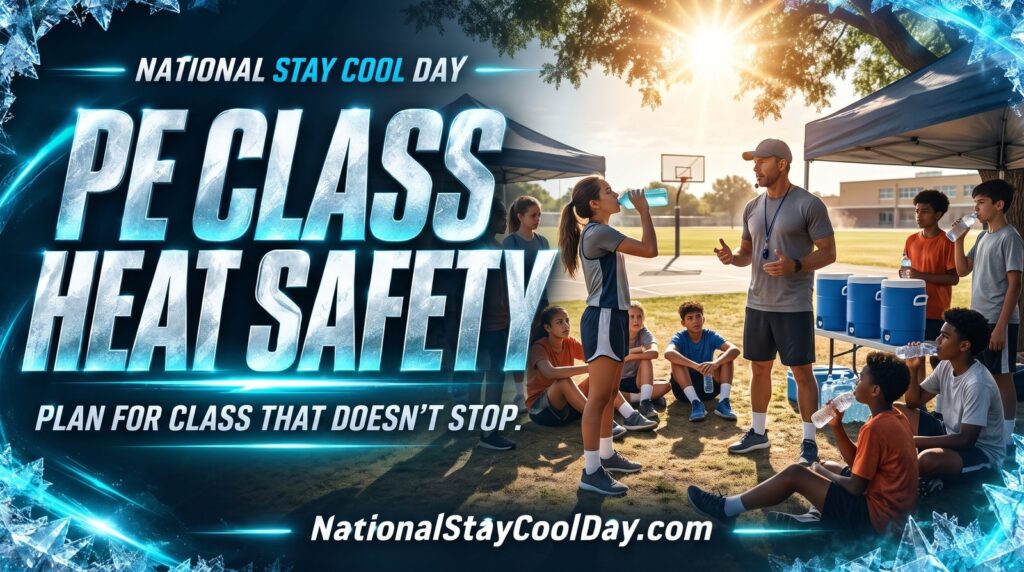
Most heat safety advice is written for coaches and athletic trainers. But on a hot afternoon in late summer or spring, a lot of kids are running outside in PE class, often in regular clothes, sometimes right after lunch, and usually with one teacher watching the whole group.
PE teachers don’t always have an athletic trainer nearby. That makes a simple plan even more important. Exertional heat stroke is 100% survivable when the student is cooled fast, on site. This guide covers what PE teachers can set up before the heat comes, how to adjust class on hot days and what to do if a student goes down.
Why PE Class Needs Its Own Heat Plan
- Every fitness level is in the same class. Some students play sports year-round. Others rarely run hard. Both are out in the same heat.
- Students aren’t dressed for it. Many are in jeans, dark shirts or layers they wore to school that morning.
- Help can be far away. The PE field is often the farthest spot from the front office, the nurse and the parking lot.
- Classes rotate all day. The afternoon groups usually get the hottest part of the day.
Before the Hot Months
- Ask for your school’s emergency action plan and find the part that covers PE areas. If the plan only covers athletics, ask the athletic director and school nurse to add PE fields and blacktop. Our free emergency action plan builder can help.
- Know how to reach the nurse and the front office from the field. A radio or a phone in your pocket, not in the locker room.
- Write down the address of your PE area and which gate an ambulance would use.
- Find out where the school keeps its cooling tub and ice, and how fast it can get to your field. If the only tub is locked in the athletic training room after school hours, that’s a gap to fix now.
- Ask the school nurse which students have health conditions or take medicines that could make heat harder on them, and what they need from you.
- Find out your district’s heat policy for outdoor PE. MISSING: district or state heat thresholds for PE vary by location and were not verified for this guide. Check with your district.
On Hot Days, Change the Class
- Check the heat before class, not just the forecast from the morning. Our guide on WBGT for schools explains why air temperature alone isn’t enough, and humidity matters too.
- Move class inside, into shade or to a cooler time of day when you can.
- Swap long runs and fitness tests for lighter activities. A timed mile can wait for a cooler day.
- Build in water breaks and let students drink whenever they need to. Don’t make them ask twice.
- Let students who are new to running in the heat start slower. The first hot weeks of the school year are when bodies are least ready. Read why the first two weeks matter.
- Never use extra running as punishment on a hot day.
Signs to Watch For
The sign that matters most is a change in how the brain is working. Act right away if a student:
- seems confused, gives strange answers or doesn’t know where they are
- stumbles, loses balance or can’t keep up
- acts out of character, gets irritable or seems “out of it”
- collapses or has a seizure
They may still be sweating. Sweat does not rule out heat stroke. Tell your students they should always speak up if they feel wrong or see a classmate who looks wrong. For the full list of signs, read exertional heat stroke symptoms every coach and parent should know.
If a Student Goes Down
- Stay with the student and get help coming. Send a reliable student to the office, or radio the nurse, while you stay put.
- Call 911 and start cooling at the same time. Don’t wait for one before starting the other.
- Cool first, transport second. Cooling should start within 10 minutes. The goal is to bring body temperature down to about 102°F within 30 minutes.
- Use cold-water immersion with ice agitation. Get the student into the tub and keep the ice and water moving around them.
- Remove anything you can quickly but don’t delay cooling because of gear removal.
- Send someone to meet the ambulance at the gate and lead the crew straight to the student.
- Keep the rest of the class back with another adult, so the people helping have room to work.
Why the rush: at 104°F, the body loses its ability to regulate its own temperature. Cold towels and ice packs are not enough. Read why cold towels don’t treat heat stroke and cool first, transport second. Our cooling station checklist shows what a ready setup looks like.
Practice It Once
Walk through the plan with the nurse, the front office and any other PE staff before the hot months start. Time how long it takes to get the tub and ice to your field. If the answer is longer than you’d like, that’s worth fixing before a student needs it.
Bring Your School Into National Stay Cool Day
National Stay Cool Day is April 8, 2027. PE departments, school nurses and whole schools can take part, and younger students can start with cool first, transport second for kids. Here’s how schools and programs can sign up.