November 16, 2026
What Every Event Organizer Should Know About Heat Safety
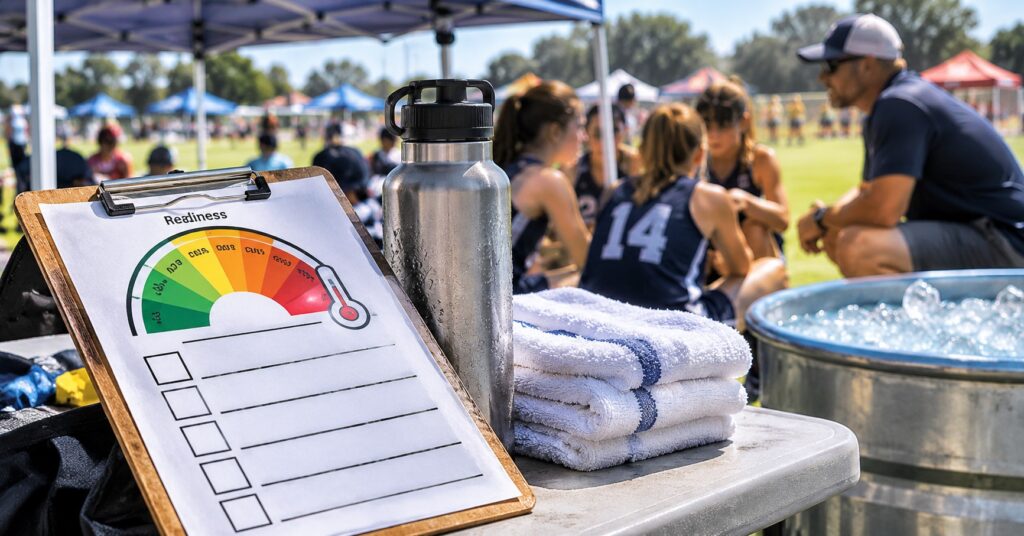
Every event has a fire extinguisher. Nobody debates it, and nobody waits for a fire to go buy one. National Stay Cool Day wants a cold-water immersion tub to be just as ordinary at every race, tournament, game, camp and outdoor event. Exertional heat stroke is 100% survivable when the athlete is cooled fast, on site. That only happens if someone planned for it before the event started.
This guide is for event organizers, tournament and race directors, venue managers, sports commissions and convention and visitors bureaus that host or promote sports and outdoor events. It is for planning and education. It does not replace a medical director, an athletic trainer or event counsel.
A cooling tub should be as common as a fire extinguisher
A fire extinguisher works because it is already on the wall when something goes wrong. Cooling equipment is the same. When an athlete collapses from exertional heat stroke, there is no time to find a tub, buy ice or figure out who is in charge. An ambulance cannot give full-body cold-water immersion on the way to the hospital, so the cooling has to happen where the athlete went down.
The National Athletic Trainers’ Association (NATA) says emergency equipment, including a whole-body cold-water immersion vessel, should be available, accessible and identified. At least 175 documented exertional heat stroke deaths have been recorded.
Four questions every event organizer should answer
Ask these during event planning, the same way you ask about permits, insurance and fire safety.
- Do you have cooling equipment on site? That means an ice-water tub, enough ice to fill it, water and towels, set up where athletes compete, not locked in a truck.
- Do you have an athletic trainer or medical staff at the event? If yes, they lead the response. If no, the plan still has to work without them.
- Who is responsible for cooling? Name one person and a backup. “Someone will handle it” is not a name.
- Do you have a written heat safety plan? It should say who calls 911, who starts cooling, where the tub is and how the ambulance gets in.
If any answer is no or not sure, fix it before the event, not on the day. Organizers can answer all four in our two-minute Event Heat Readiness Check.
Cool First, Transport Second
Call 911 right away, while cooling starts. Do not write a plan that only calls an ambulance and waits. Start cooling on site, keep the athlete in ice water, and transport after cooling is underway. Start cooling within 10 minutes. That is Cool First, Transport Second, and it belongs in every event’s written plan.
Read Cool First, Transport Second, sideline cold tub setup for every event and the cooling station checklist.
What a basic event heat plan covers
- The tub: where it sits, who fills it and when, and where the ice comes from.
- The people: who calls 911, who starts cooling, who meets the ambulance and at which gate.
- Heat checks: how conditions are checked during the event and who can pause or stop play. Follow your governing body or state association, not a chart invented here.
- Water and shade: for athletes, officials, volunteers and spectators.
- More than one athlete: what happens if two people need cooling at the same time.
Our guide to heat emergency planning walks through each part. It was written for schools, and the same steps work for any venue.
How convention and visitors bureaus and event groups can help
Convention and visitors bureaus, sports commissions and event associations talk to organizers long before an event comes to town. That makes them the right people to put heat safety on the checklist early.
- Add a heat safety section to your event organizer forums, member boards and planning guides.
- Share the Event Heat Readiness Check, a short form with the four questions above, with every event you host or promote, and ask organizers to fill it out before the event.
- Point organizers to the free tools before the event, not after a scare.
Be proactive. The goal is simple: make sure every organizer thinks about cooling before the first whistle.
Free tools for event organizers
National Stay Cool Day’s free heat safety tools run in the browser, with no account and no cost. The EAP Builder turns the plan above into a finished document, and the Heat Rules Card helps post heat levels where staff can see them.
National Stay Cool Day is Thursday, April 8, 2027.
Take the next step: build your heat emergency action plan with our free heat safety tools, then sign up your school for National Stay Cool Day on April 8, 2027. Both are free.
Sources
- National Athletic Trainers’ Association. Position Statement: Emergency Action Plan Development and Implementation in Sport (2024). PMC11220767.
- National Athletic Trainers’ Association. Position Statement: Exertional Heat Illnesses (2015). PMC4639891.
- NFHS Sports Medicine Advisory Committee. Heat Acclimatization and Heat Illness Prevention Position Statement (April 2022). NFHS PDF.
- American College of Sports Medicine. Expert Consensus Statement on Exertional Heat Illness (2023). PubMed 37036463.
- National Weather Service. Heat safety. weather.gov/safety/heat.
This article is for planning and education. It does not replace a medical director, athletic trainer or event counsel. Review medical steps with your medical team. In an emergency, call 911.