
November 2, 2026
Heat Safety in Indoor Gyms: Planning for Heat Where No One Expects It
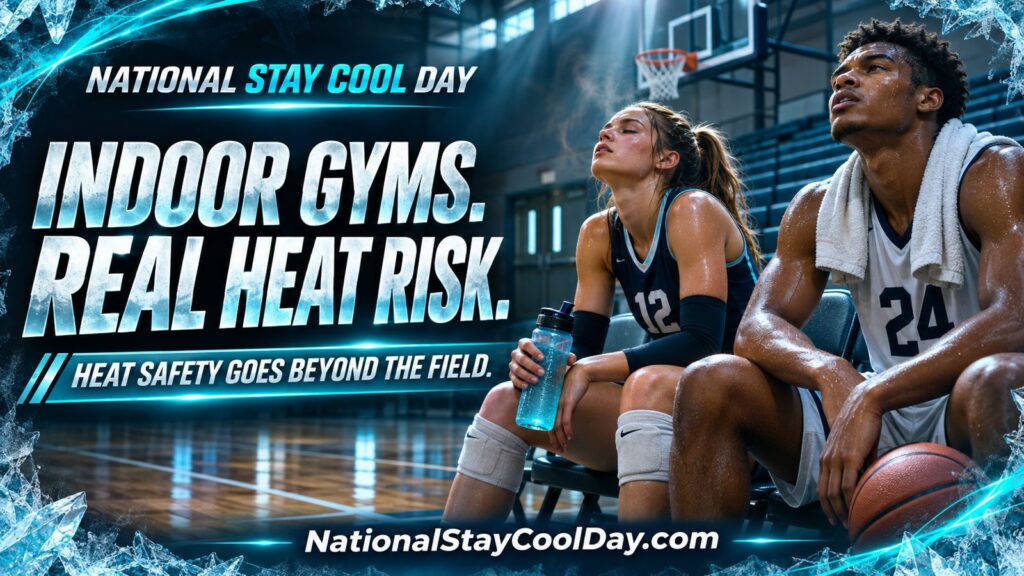
Heat stroke is not only an outdoor problem. A gym with no air conditioning, closed doors and a full practice going on can get as dangerous as a field in August. Volleyball, basketball, wrestling, cheer and indoor conditioning all happen in rooms like this, and many of them start in the hottest weeks of the year.
Exertional heat stroke is 100% survivable when the athlete is cooled fast, on site. Indoors, the risk is that nobody expects it. There is no sun, no “heat day” on the schedule, and often no cooling tub in the building. This guide covers how to plan for heat inside.
Why Indoor Heat Gets Missed
- No sun, no alarm. Coaches and parents think of heat as an outdoor thing. A shaded room feels safer than it is.
- Trapped air. Many older gyms, auxiliary gyms and wrestling rooms have no air conditioning and little airflow. Heat and humidity build as the day goes on and as more bodies fill the room.
- Humidity. Sweat from a full team adds moisture to the air. When the air is humid, sweat does not cool the body well. Read more in humidity and heat at practice.
- Long sessions. Tournaments and camps in gyms can run all day, game after game, with little time to recover.
- Nothing on site. Outdoor programs are starting to bring cooling tubs to the field. Indoor programs often have none, because no one planned for it.
Know the Warning Signs
The sign that matters most is a change in how the brain is working. Watch for an athlete who:
- is confused, can’t answer simple questions or doesn’t know where they are
- stumbles, loses balance or can’t run a drill they know
- acts strangely, becomes irritable or seems “out of it”
- collapses or has a seizure
An athlete with heat stroke may still be sweating. Sweat does not rule it out. If an athlete’s thinking or behavior has changed, treat it as heat stroke until a medical professional says otherwise. For the full list, read exertional heat stroke symptoms every coach and parent should know.
Before the Season: Check the Room
- Know which rooms have air conditioning and which don’t. Walk every space your teams use, including auxiliary gyms, wrestling rooms, weight rooms and hallways used for running.
- Measure, don’t guess. A heat reading taken inside the room tells you more than the outdoor forecast. If your state association has heat guidance, check whether it covers indoor activity, and follow it. See WBGT for schools.
- Plan airflow. Know which doors can be opened safely and where fans can go.
- Put a cold-water immersion tub in the building. Pick a spot close to the gym floor, with room around it and a clear path to the door for emergency crews.
- Write it into your emergency action plan. Name who calls 911, who starts cooling, who meets the ambulance at the door and where the tub is. Our free emergency action plan builder walks you through it.
On Practice and Game Days
- Take a heat reading inside before practice starts and again later in long sessions.
- Build in real breaks, with water, and let athletes step out of the hottest part of the room.
- Go slower with athletes who are new, coming back from time off or not used to the heat yet. See why the first two weeks matter.
- Keep an eye on athletes who are sick, under-rested or have not been eating or drinking well.
- On tournament days, plan for the whole day, not one game. Our guide to multi-game days covers that.
If an Athlete Goes Down
- Call 911 and start cooling at the same time. One person calls. Another starts cooling. Don’t wait for one to finish before starting the other.
- Cool first, transport second. Start cooling within 10 minutes. The goal is to bring body temperature down to about 102°F within 30 minutes.
- Use cold-water immersion with ice agitation. Get the athlete into the tub and keep the ice and water moving around them.
- Remove anything you can quickly but don’t delay cooling because of gear removal.
- Send someone to meet emergency crews at the door and lead them to the athlete.
Why the rush: at 104°F, the body loses its ability to regulate its own temperature. Cold towels and ice packs are not enough. Read why cold towels don’t treat heat stroke and cool first, transport second.
Indoor Heat Checklist
- Every room your teams use has been checked for heat and airflow
- Someone takes an indoor heat reading before practice
- A cold-water immersion tub is in the building and everyone knows where
- Ice is on hand before practice starts
- The emergency action plan names the indoor tub location and who does what
- Staff know the warning signs and know to call 911 and cool at the same time
- Someone is assigned to meet emergency crews at the door
Quick answers
Can athletes get heat stroke indoors?
Yes. Many gyms and wrestling rooms have no air conditioning and little airflow, humidity builds as the room fills, and tournaments can run all day with little recovery.
How can schools make indoor practice safer in the heat?
Walk every room your teams use, take a heat reading inside before practice, plan airflow, build in real breaks with water, and put a cold-water immersion tub in the building near the gym floor.
What are the warning signs of heat stroke in an indoor athlete?
A change in how the brain is working: confusion, strange answers, stumbling or losing balance, acting out of character, collapse or a seizure. They may still be sweating. Sweat does not rule out heat stroke.
What should staff do if an athlete goes down in the gym?
Call 911 and start cooling at the same time. Cool first, transport second: start cooling within 10 minutes and aim for about 102°F within 30 minutes, using cold-water immersion with ice agitation. Remove anything you can quickly but don't delay cooling because of gear removal. Send someone to meet emergency crews at the door.
Bring Your Program Into National Stay Cool Day
National Stay Cool Day is April 8, 2027. Schools, gyms and clubs can all take part. Learn how schools and programs can sign up, and find more free tools on our school heat resources page.