October 22, 2026
Heat Cramps Explained: What They Are and What They Are Not
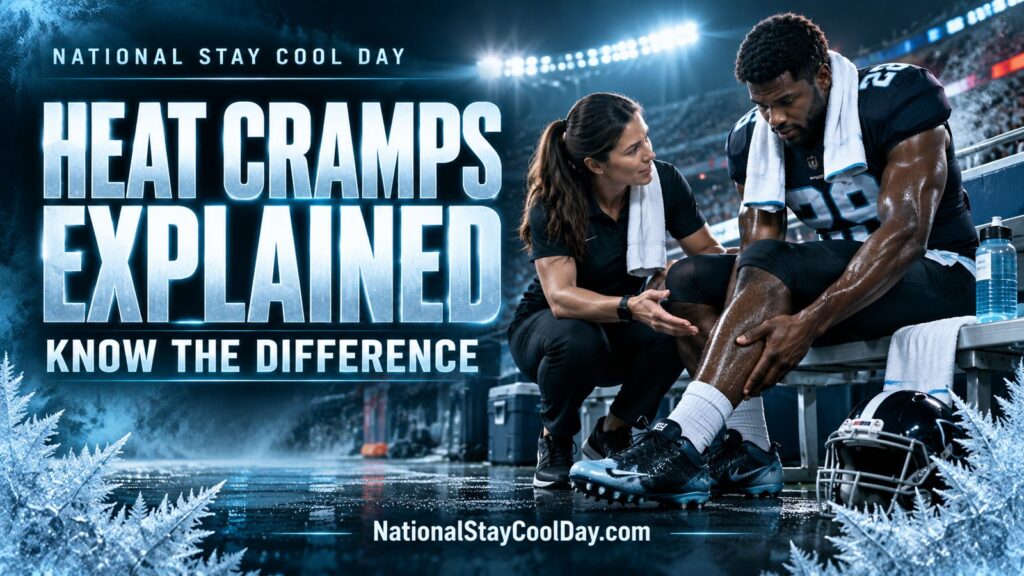
A player grabs a calf in the fourth quarter. A runner pulls up with a locked hamstring on the last lap. Most people on the sideline call it “heat cramps” and reach for a sports drink. The cramp is real, but the name sends people in the wrong direction. Cramps are not a sign of a dangerously hot body, and treating every cramp like a minor nuisance also misses the times a cramp is part of something serious.
This guide explains what exercise cramps are, what they are not, how to treat them on the sideline and when a cramping athlete needs to stop and get help.
What Cramps Are
The National Athletic Trainers’ Association (NATA) calls them exercise-associated muscle cramps (EAMCs): sudden, involuntary, painful contractions of a muscle during or after exercise. NATA identifies them as the most common heat-related problem athletes experience.
They usually strike the large, hard-working muscles that cross two joints in the legs, such as the calf and the hamstring. Athletes often feel small twinges or twitching before the full cramp locks in. Most cramps from muscle overload or fatigue are short and mild, though some are strong enough to end an athlete’s day and leave soreness for several days afterward.
What Cramps Are Not
NATA states that “heat cramps” is a popular but technically inappropriate term. Cramps are not directly caused by a high body temperature. They do not readily occur after passive heating at rest, and they happen in warm and cool conditions alike.
That matters for two reasons:
- A cramp is not an early stage of heat stroke. Heat stroke is a dangerous rise in core body temperature with changes in brain function. A cramp is a muscle problem. They are different conditions.
- A cramping athlete still needs to be watched. Cramps happen on hot days during hard work, which is exactly when heat exhaustion and heat stroke happen too. A cramp does not rule anything else out.
Cramps, Heat Exhaustion and Heat Stroke Side by Side
| Exercise cramps | Heat exhaustion | Exertional heat stroke | |
|---|---|---|---|
| What it is | Painful, involuntary muscle contractions during or after exercise | Inability to keep exercising because the heart and circulation cannot keep up | Severe rise in core body temperature that overwhelms the body’s cooling system |
| What you see | Visible cramping, localized pain, thirst, sweating, fatigue | Fatigue, dizziness, heavy sweating, weakness, athlete cannot continue | Confusion, stumbling, odd behavior, irritability, collapse, seizures. The athlete can still be sweating |
| Brain function | Normal. Athlete is alert and talking | Normal or near normal | Changed. This is the dividing line |
| First step | Stop, rest, stretch the muscle, sodium-containing fluids | Stop, move to shade, remove extra gear, cool the skin, elevate legs, fluids | Call 911 and start cold-water immersion with ice agitation on site |
| Return | Often within minutes to hours | Same-day return is not advised | Only after physician clearance and a gradual return plan |
For a deeper look at the signs of heat stroke, read exertional heat stroke symptoms every coach and parent should know.
How to Treat a Cramp on the Sideline
- Stop the activity. Get the athlete off the field and out of play.
- Stretch the muscle. NATA names rest and passive static stretching of the cramping muscle as the immediate treatment. Hold the stretch until the cramp lets go. For a calf cramp, straighten the knee and pull the toes gently toward the shin.
- Replace sodium and fluid. For an athlete who sweats heavily, NATA calls for sodium-containing fluids or foods. Sports drinks, a salt packet added to a drink or salty snacks all help.
- Ice or massage for comfort. Both help with soreness once the cramp has eased.
- Keep checking the athlete. A cramping athlete is normally alert, talking and responding normally. Ask simple questions. Watch how the athlete walks back to the bench.
Hydration and Electrolytes: What They Do and Do Not Do
Good hydration and sodium replacement are part of every heat plan. NATA calls for free access to fluids at all times and sodium-containing fluids and foods to replace what is lost in sweat. Athletes who sweat heavily and lose a lot of salt benefit most.
Fluids alone do not prevent every cramp. NATA reports that a growing body of research shows many exercise cramps are linked to muscle overload and fatigue rather than dehydration or low electrolytes. Cramping athletes often drink and sweat about the same as athletes who never cramp. That is why the first treatment is rest and stretching, and why conditioning and smart practice loads matter as much as the water cooler.
When a Cramp Means Stop and Get Help
Most cramps resolve on the bench. These situations do not. Stop activity and get medical help right away when:
- The athlete is confused, disoriented, acting oddly or collapses. That is not a cramp. Treat it as heat stroke until proven otherwise and start cooling.
- The cramping spreads or the athlete has whole-body weakness instead of one tight muscle.
- The cramp does not ease with rest and stretching, or keeps coming back in the same session.
- The athlete has known sickle cell trait. NATA directs medical staff to take a thorough history to separate ordinary exercise cramps from cramping caused by an underlying condition such as sickle cell trait. Ordinary cramps often start with small muscle twitches; cramping from an underlying condition does not. An athlete with known sickle cell trait who cramps or weakens during exercise stops immediately and is evaluated by medical staff.
- The athlete cramps again and again across the season. NATA recommends a thorough medical screening for recurring cramps.
If It Is Heat Stroke
Confusion, stumbling, odd behavior or collapse during or after activity in the heat is heat stroke until proven otherwise, even if the athlete is sweating or had been cramping.
- Call 911 and start cooling at the same time.
- Put the athlete in a tub of ice water, covering as much of the body as possible, with the head supported above the water.
- Remove anything you can quickly but don’t delay cooling because of gear removal.
- Keep up ice agitation the whole time.
- Start cooling within 10 minutes and cool to about 102°F within 30 minutes, then transport.
Cold towels and ice packs are not enough. Read why cold towels, ice packs and fans don’t treat heat stroke.
Put It in Your Plan
- Post a Heat Rules Card at every field so every coach knows the heat levels, break rules and emergency steps.
- Build a site-specific plan with the free Emergency Action Plan Builder, including who responds when an athlete goes down and where the cooling tub is.
- Keep sodium-containing drinks and snacks on the sideline along with water.
- Ask about past cramping, past heat illness and sickle cell trait status in the preseason physical.
Frequently Asked Questions
Are heat cramps caused by heat?
No. NATA states that cramps are not directly related to an elevated body temperature and occur in warm and cool conditions. “Heat cramps” is a common name, not an accurate one.
Does drinking more water stop cramps?
Fluids and sodium help athletes who sweat heavily, and every athlete needs free access to fluids. Rest and stretching are the first treatment, because many cramps come from muscle overload and fatigue.
Can an athlete go back in after a cramp?
Often, yes, once the cramp is gone, the athlete is alert and moving normally, and the medical staff agree. If there are any signs of heat exhaustion or heat stroke, the athlete does not return that day.
Is pickle juice a real treatment?
NATA notes that small amounts of a salty solution such as pickle juice are fine if the athlete tolerates them. Stretching remains the main treatment.
Does a cramp mean an athlete is about to have heat stroke?
No. They are different conditions. Keep watching every athlete on a hot day, and treat any change in behavior or awareness as heat stroke.
National Stay Cool Day Is April 8, 2027
National Stay Cool Day is a free national day for schools and programs to put heat plans in place before the season. Sign your school or program up.
References
- National Athletic Trainers’ Association. Position Statement: Exertional Heat Illnesses. Journal of Athletic Training. 2015;50(9):986-1000. See recommendations 4, 15, 16, 17, 27, 28, 29, 30 and Table 3. pmc.ncbi.nlm.nih.gov/articles/PMC4639891
This article is for education and planning. It does not replace medical advice. Review all medical steps with your team physician or medical director. In an emergency, call 911.